Ellen Yorke Lindley
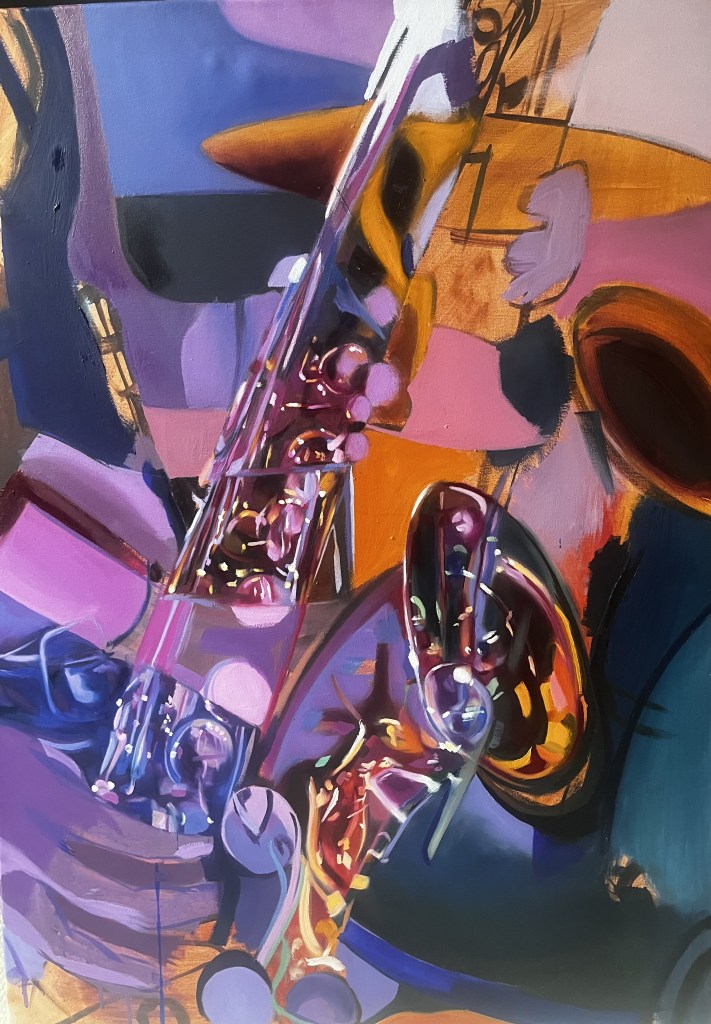
The Saxophonist
- Inspired by the blur of motion and ambience of music
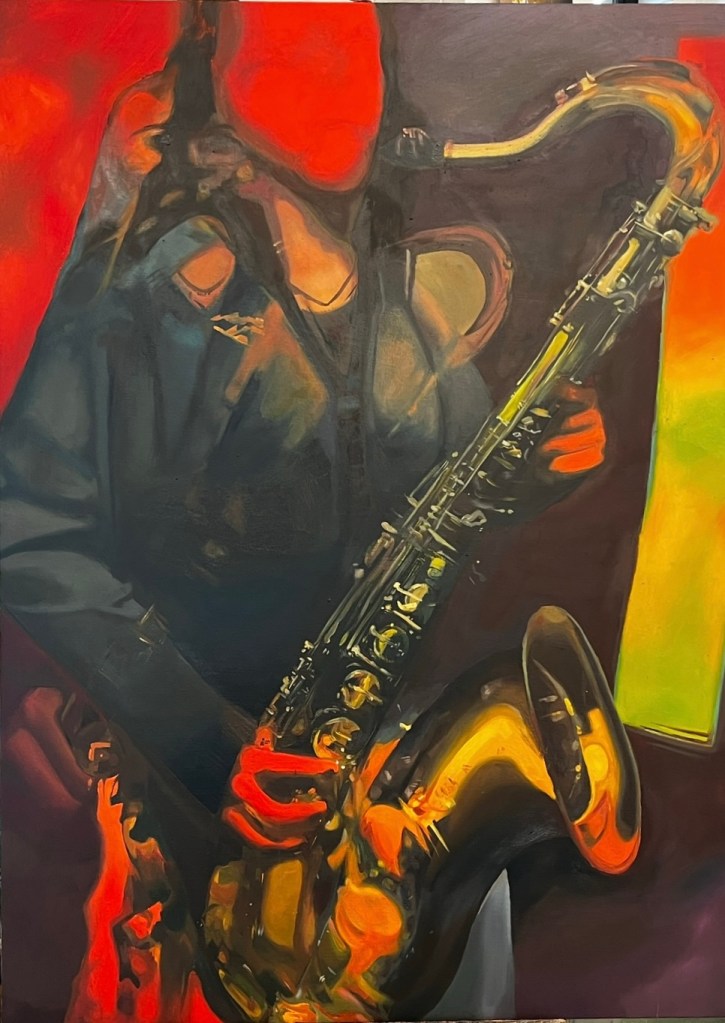
- Looking at how light reflects off the saxophone
- Blurred through motion and layered images
- Bright colours to mimic clubs and jazz bars (ambience / atmosphere)
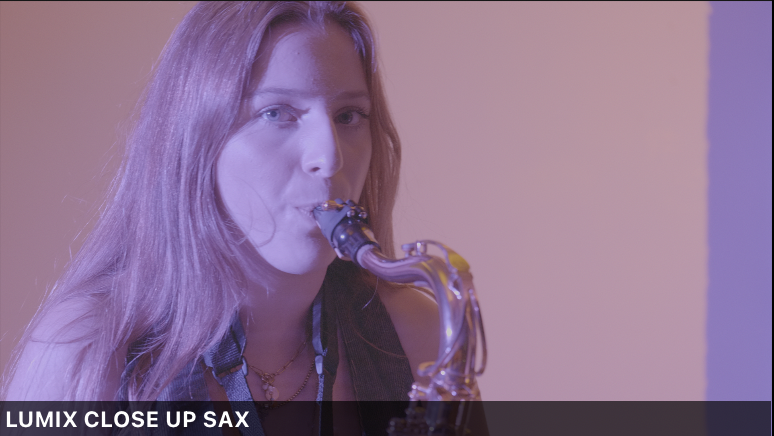
I created this music video, as I wanted to use it as a reference for my art, as well as additional media. It was an experiment – a way of physically looking at movement and ambience, zooming in on details of the musician and the way they play and feel whilst playing their instrument. The music is from a student band I am in – it is produced by my band and the music tech students at my school. It is a cover of Sade’s – ‘Is it a crime’?.

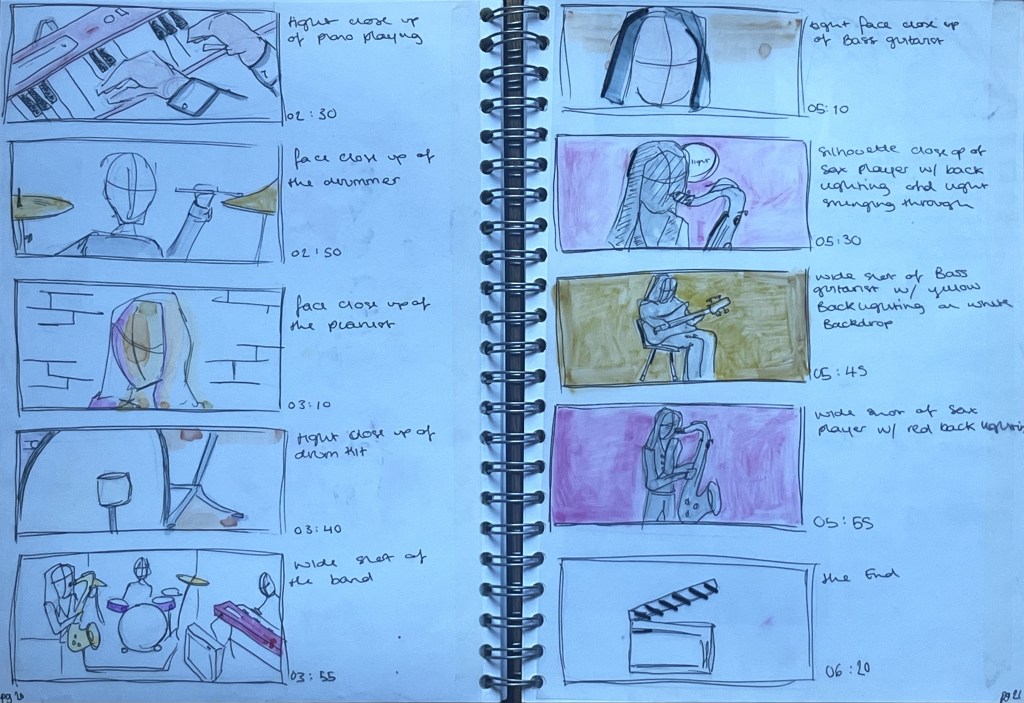
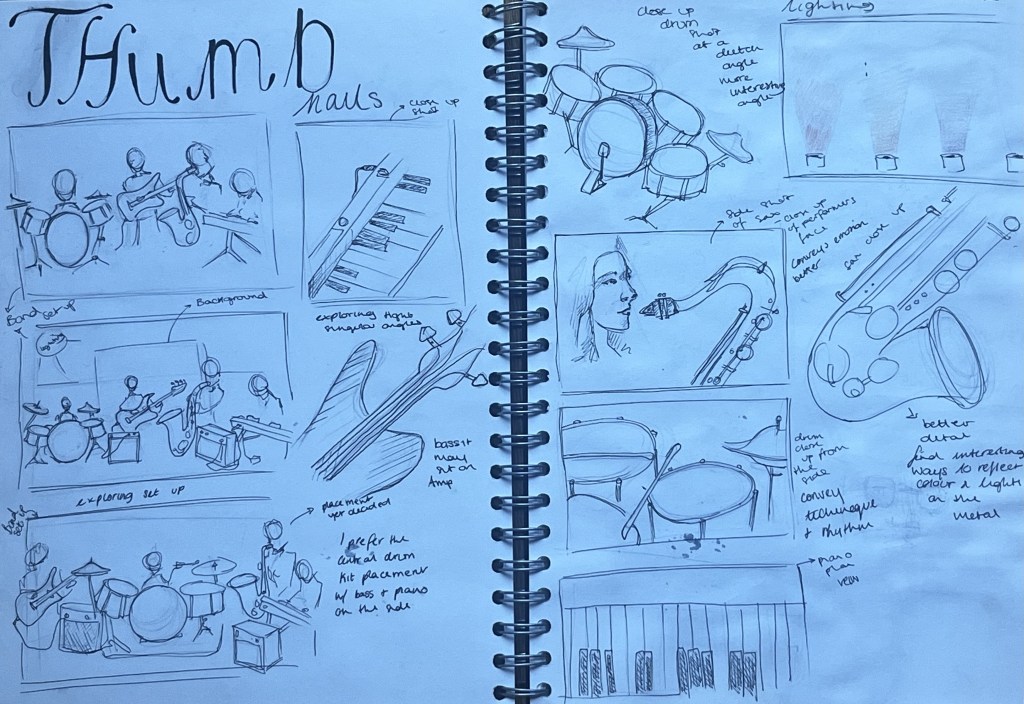
Planning and storyboarding for music video – Looking at framing and colour schemes. Figuring out the shot list and type of shots and angles I wanted to use.

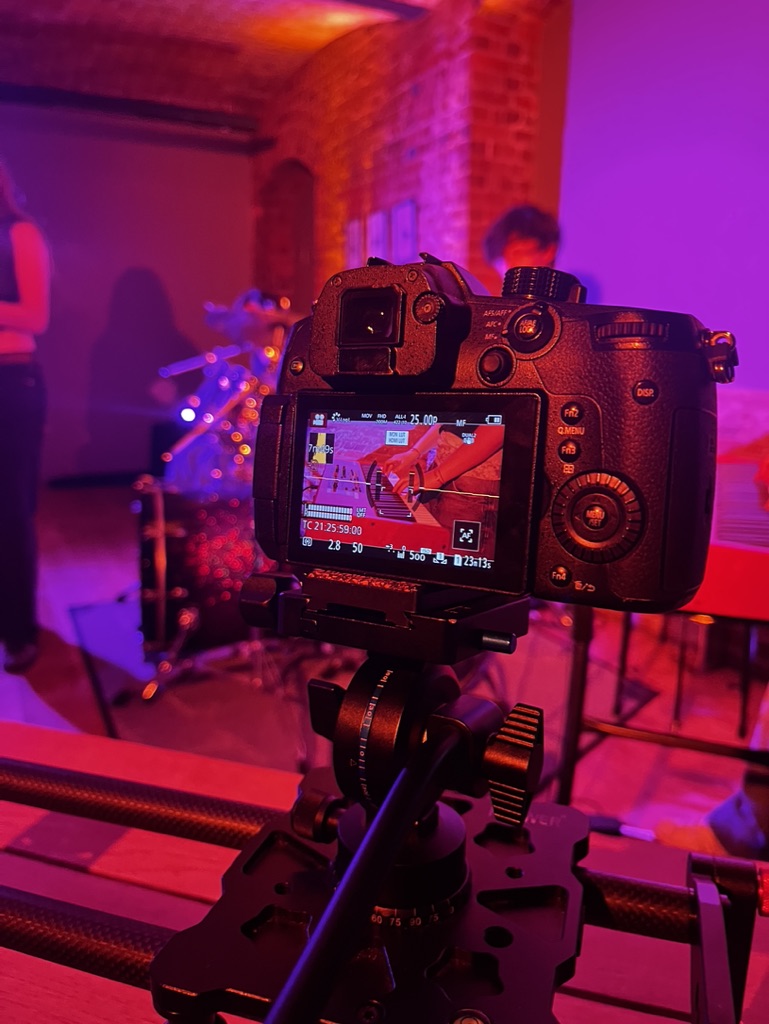
Camera set-up of the film shoot.
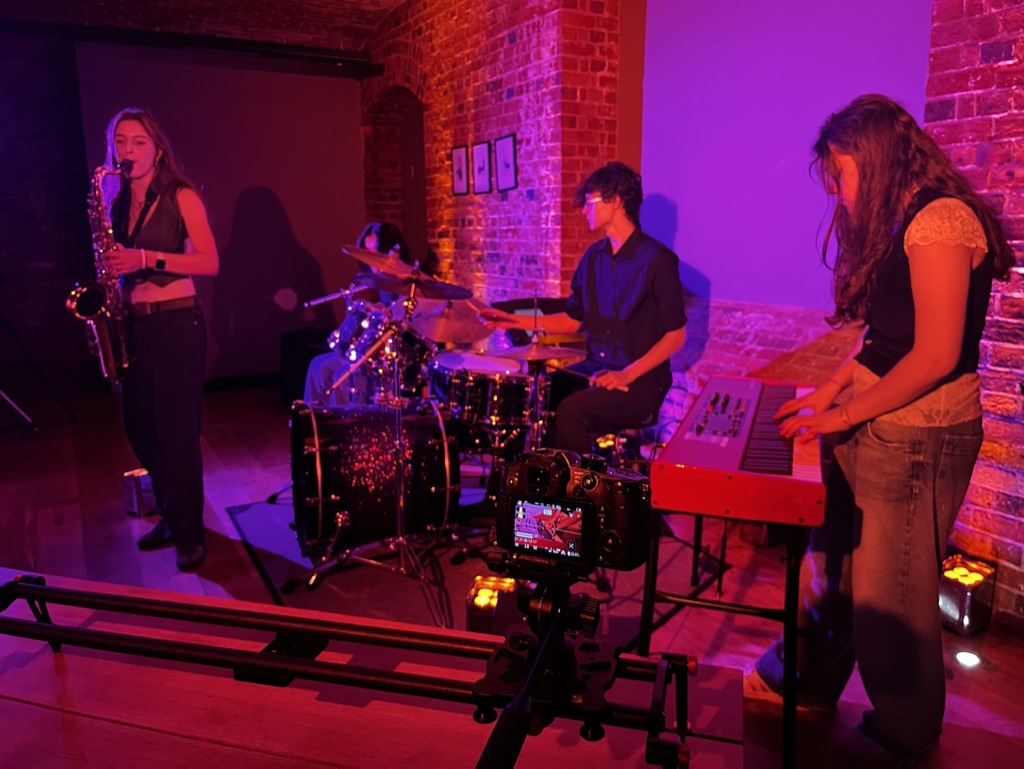
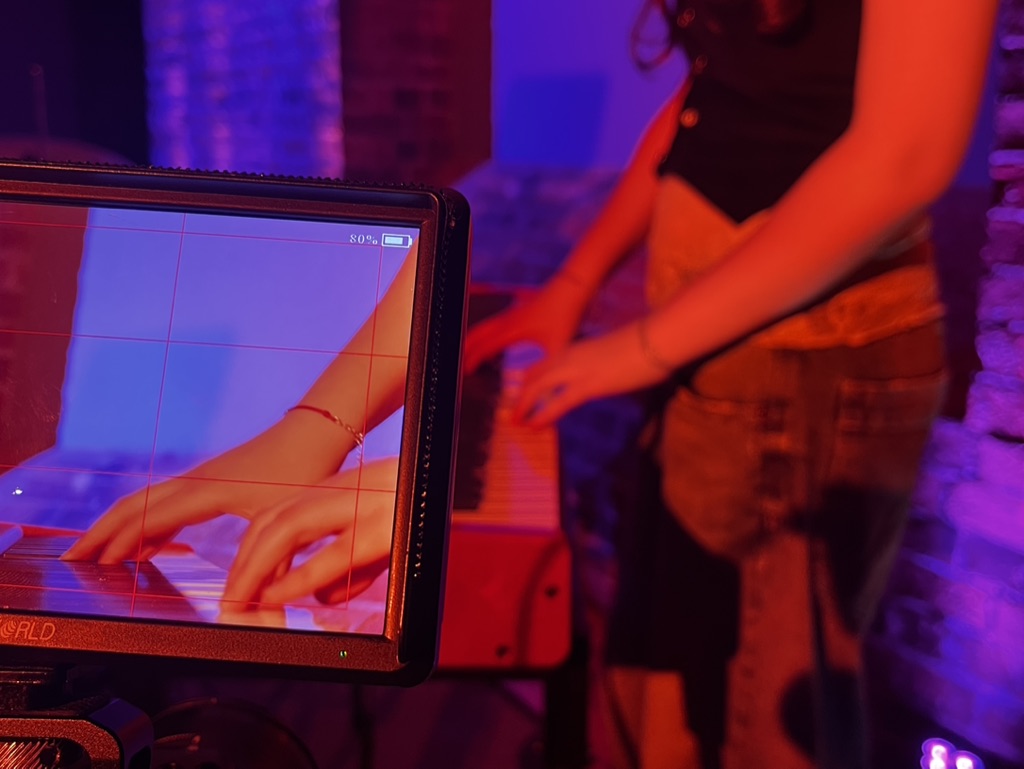
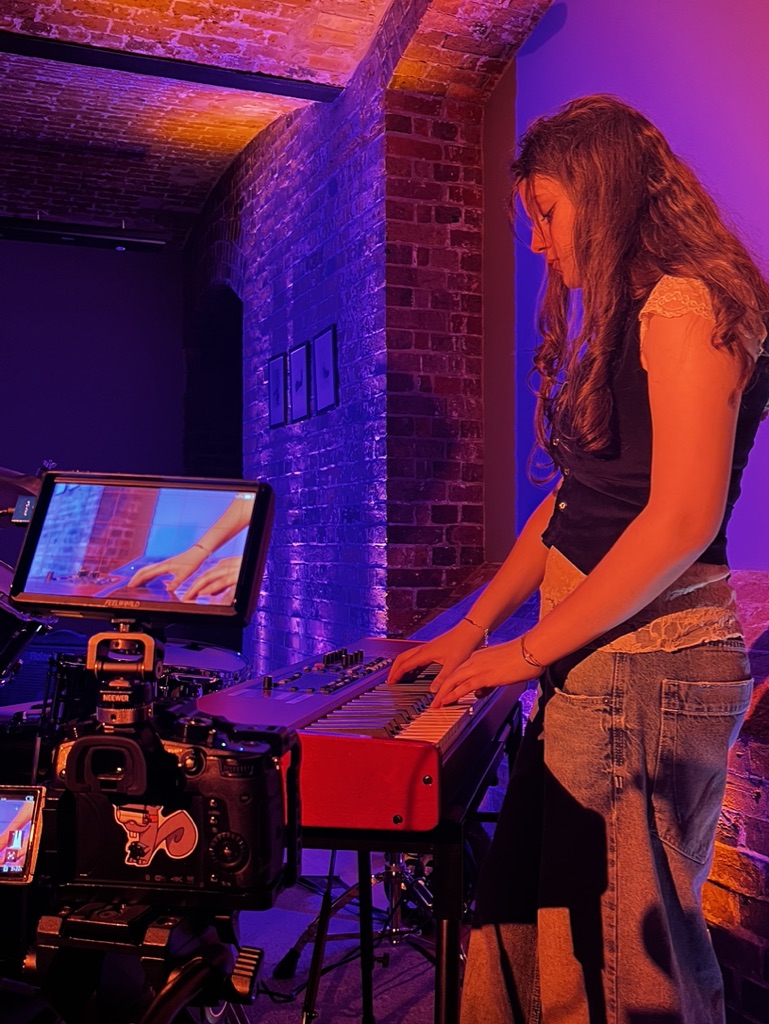
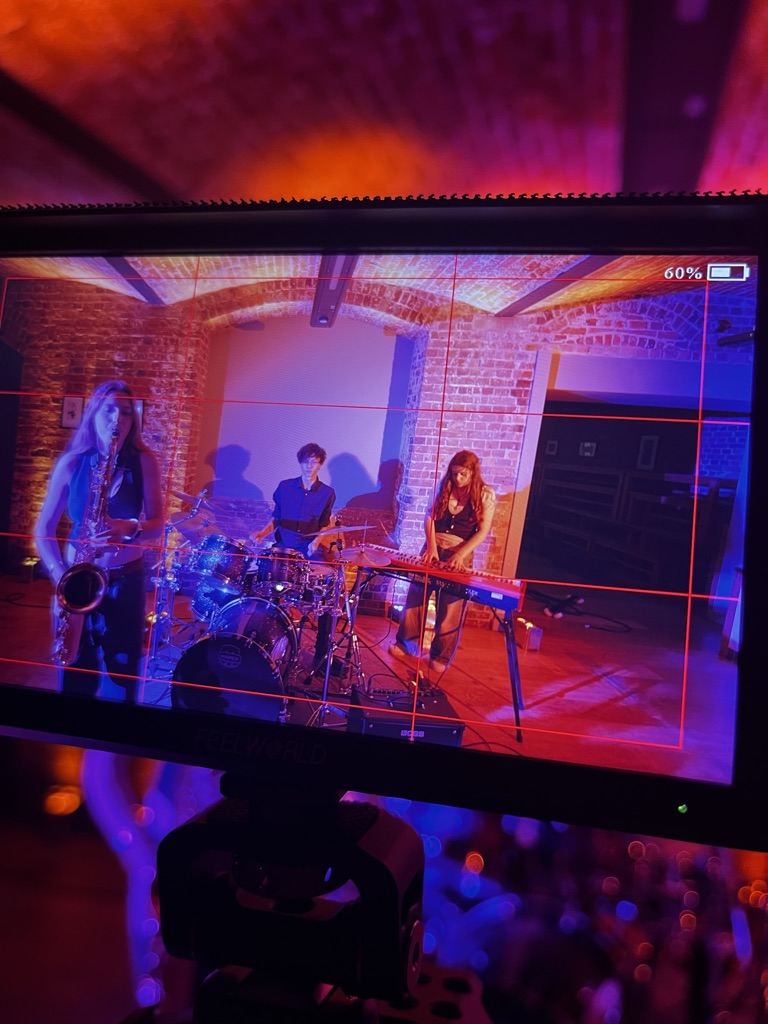
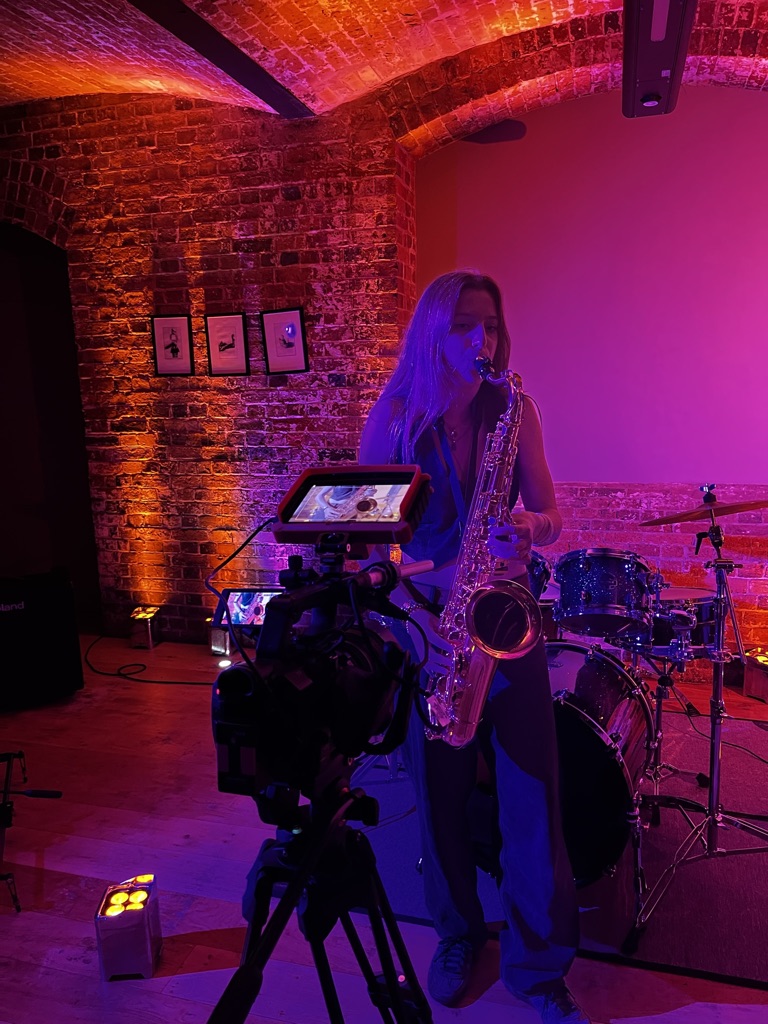
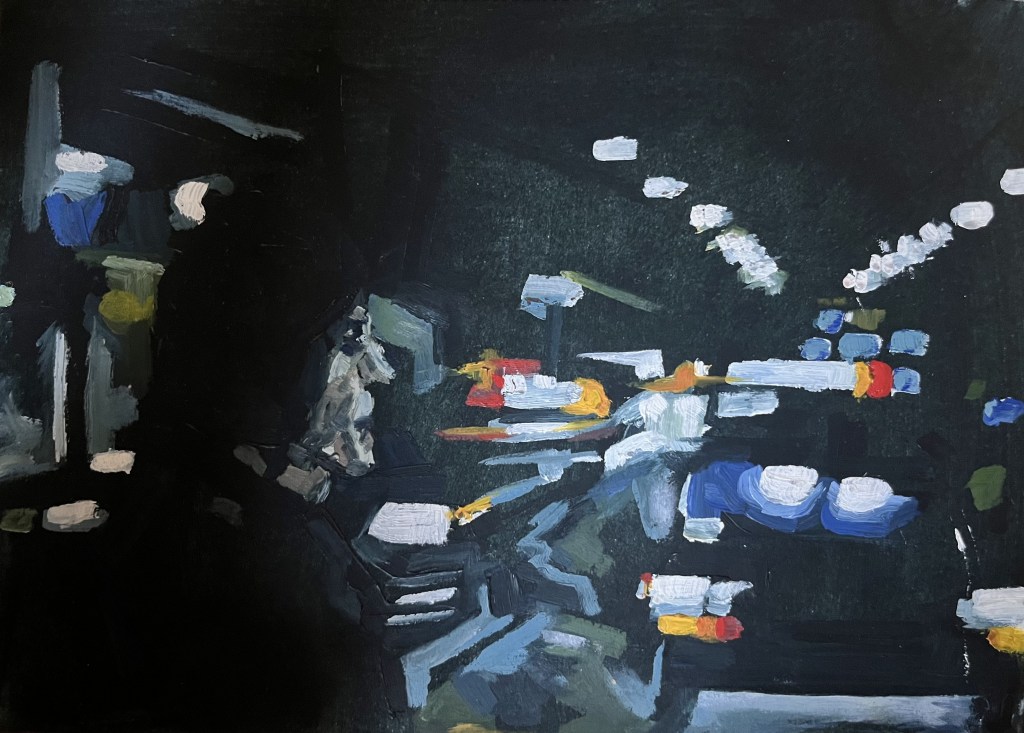
FILM STILLS – I took screenshots of moments in the video, and taking inspiration from previous paintings I had done, I painted in blocked style.


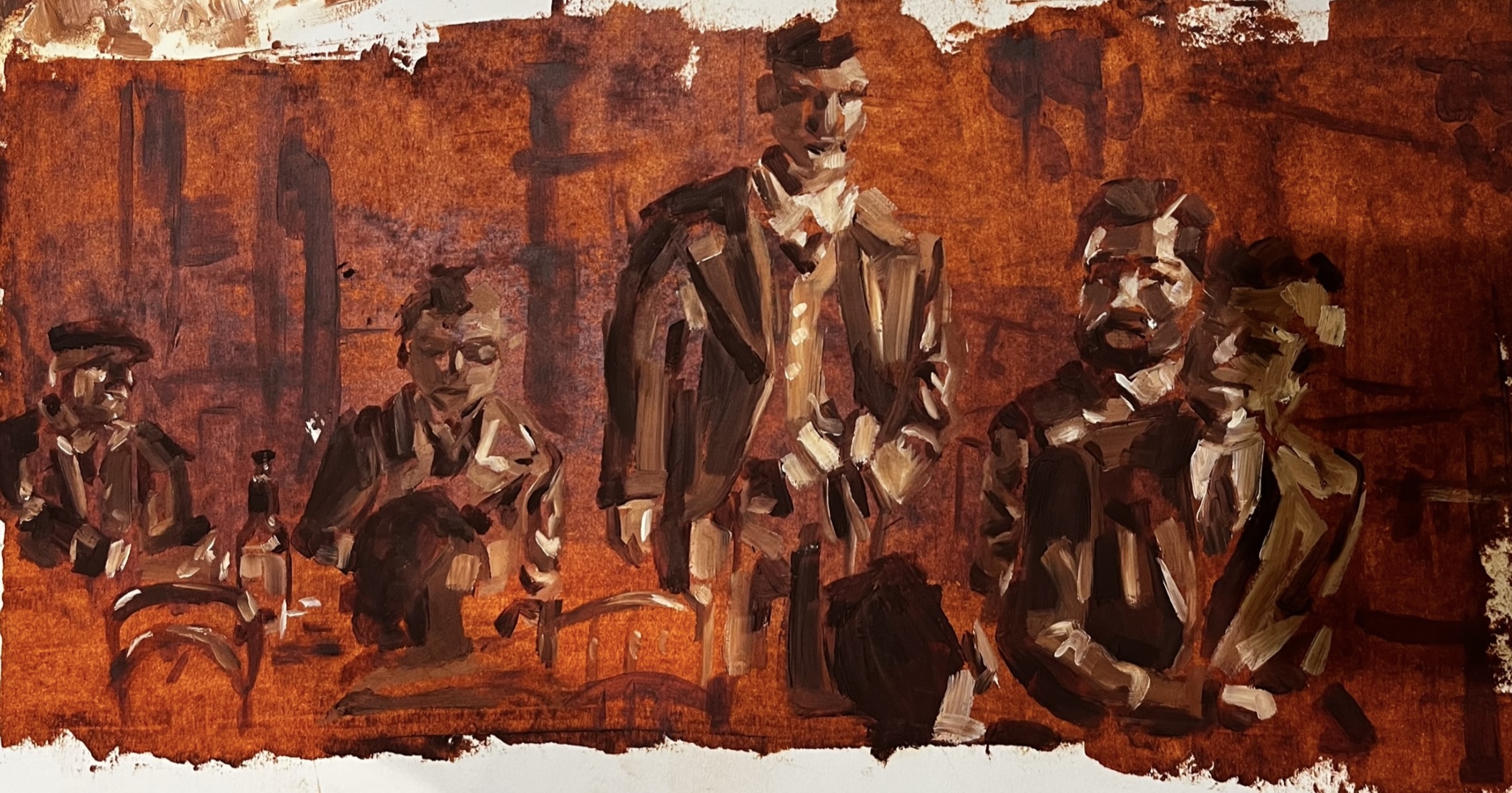

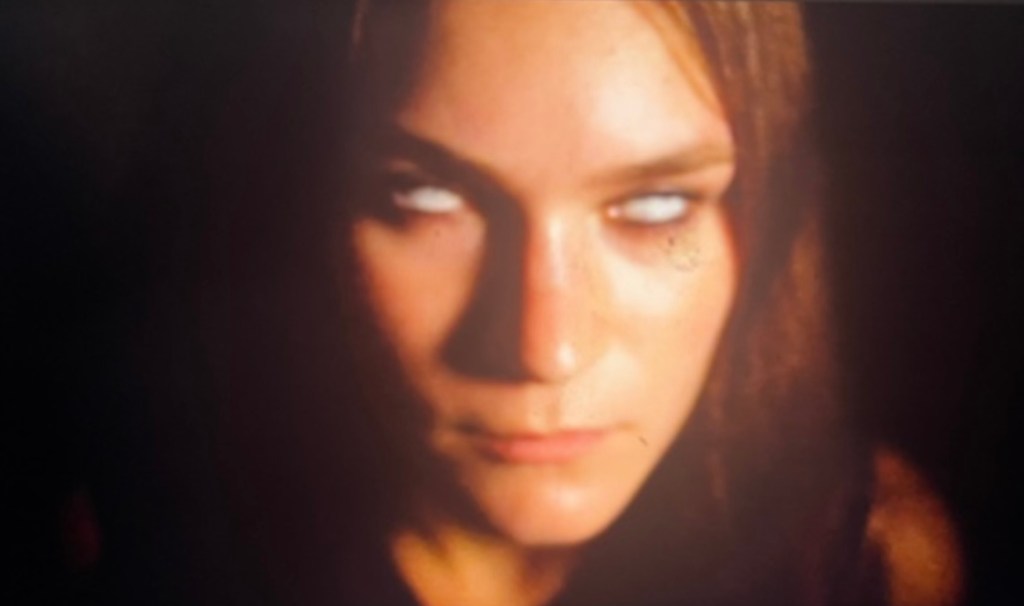
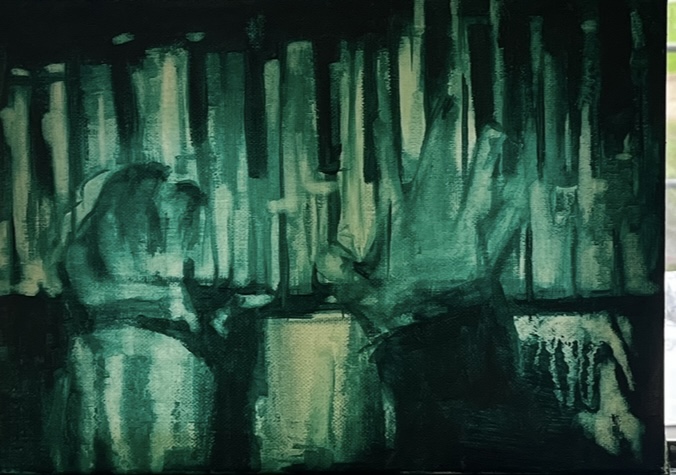
Previous art I painted came from different films: Peaky Blinders, Queens Gambit, and my own still from a horror. This was when I first starting trying to use certain types of colour.
I tried to get stills from as many different shots as I could. By using the blocked painting form, I was able to produce quick abstract paintings, which allowed me to become comfortable and familiar with the imagery in front of me. It helped me build my muscle memory, so when it came to painting more difficult pieces, it became easier.


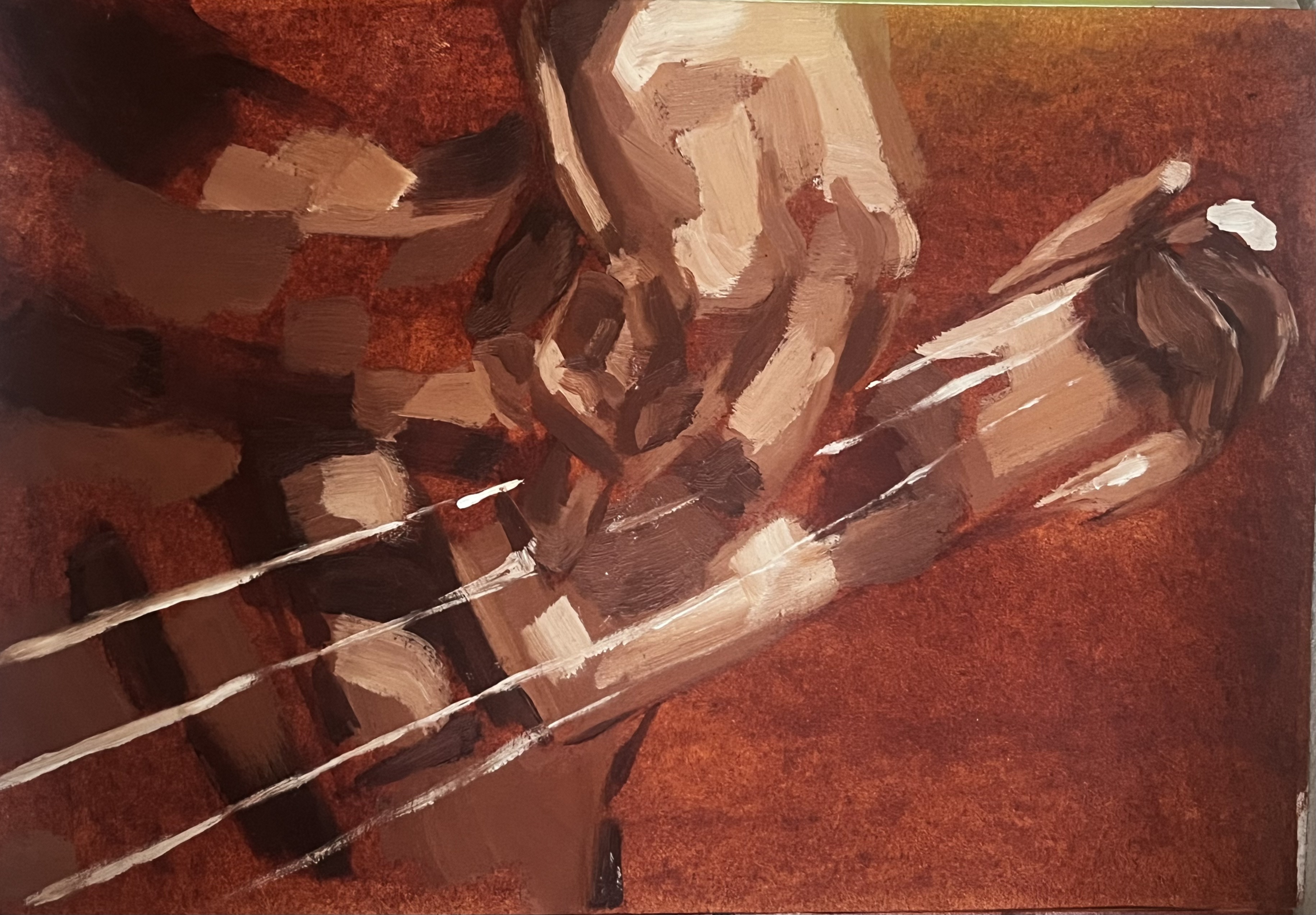
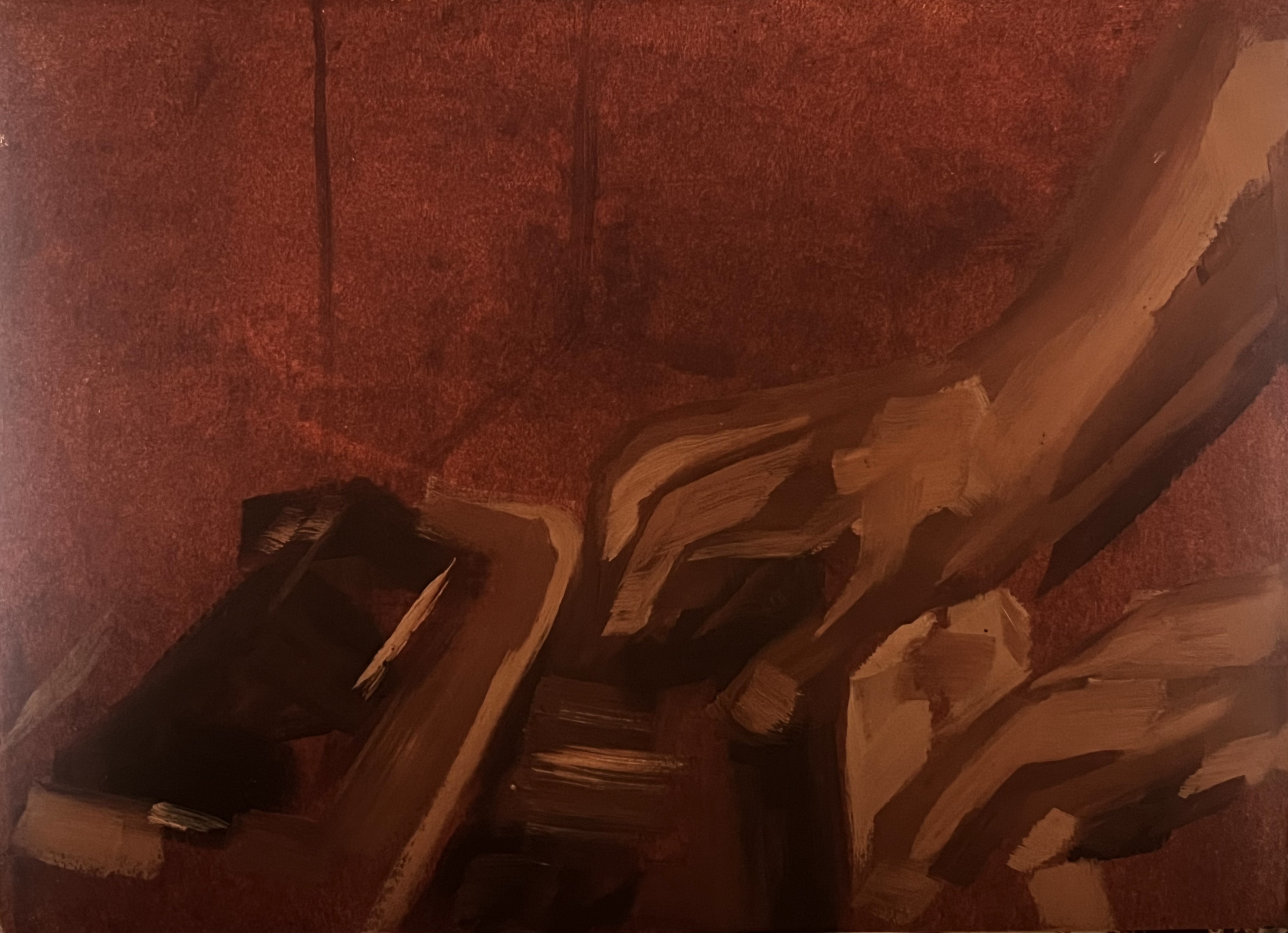
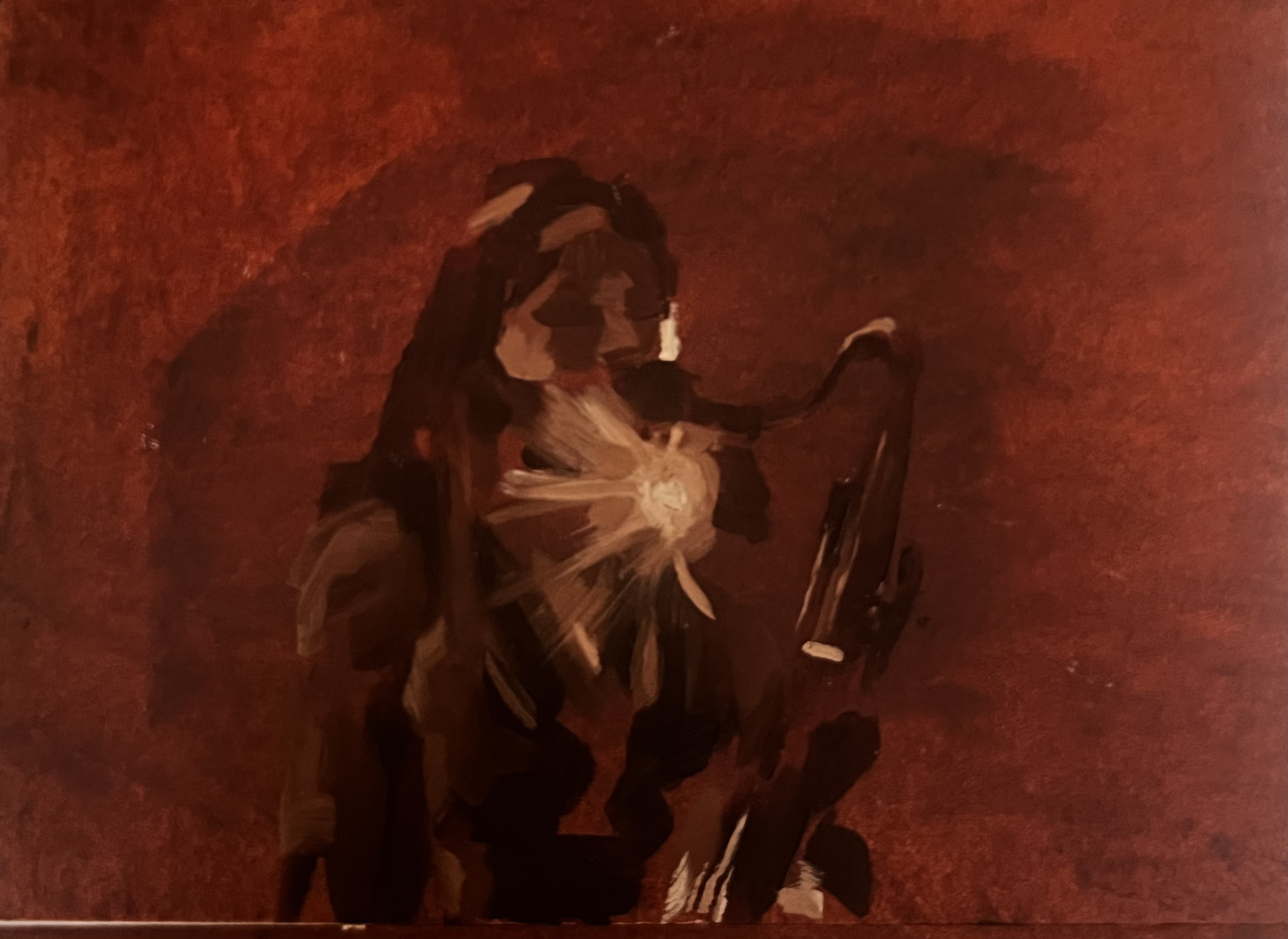
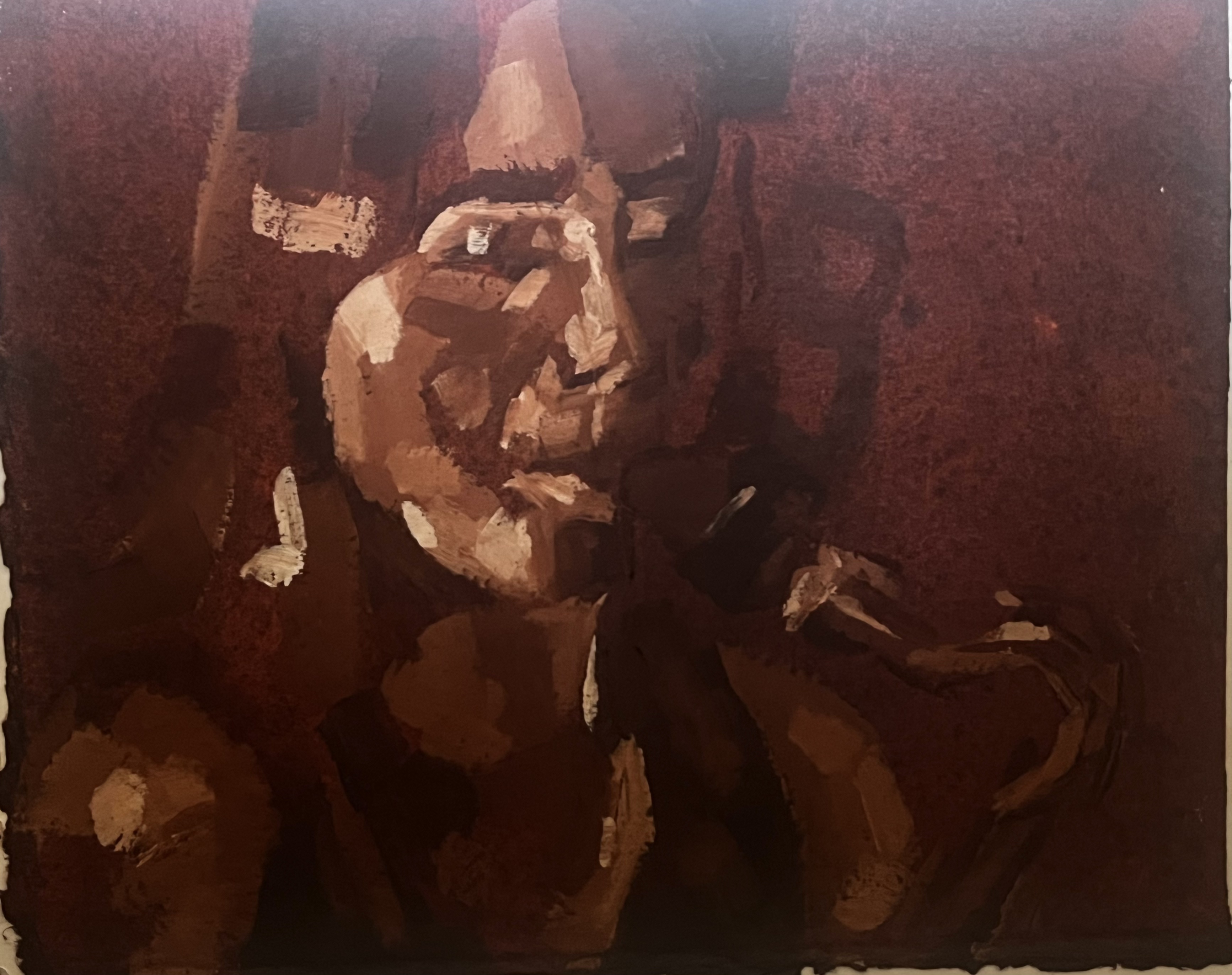
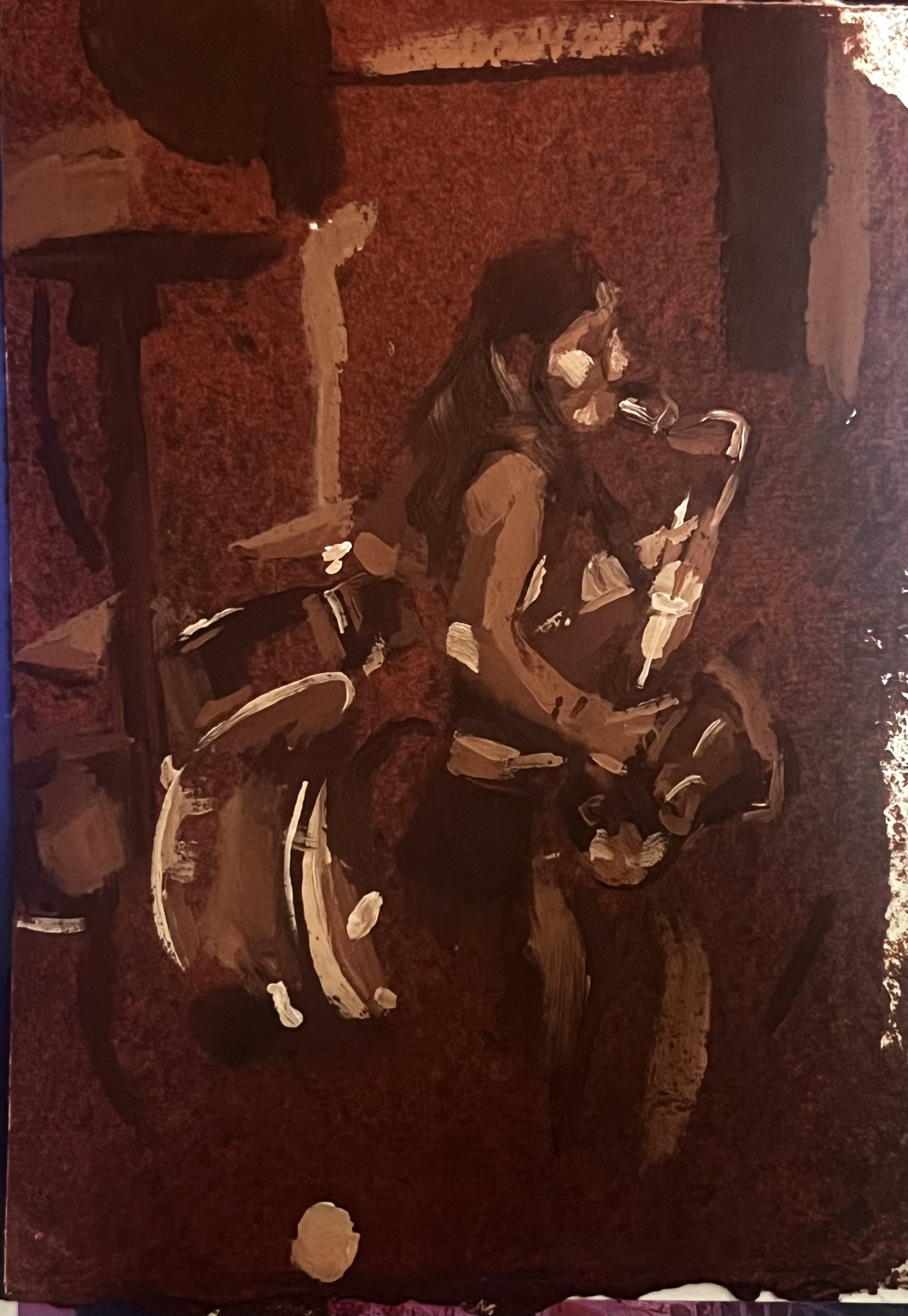

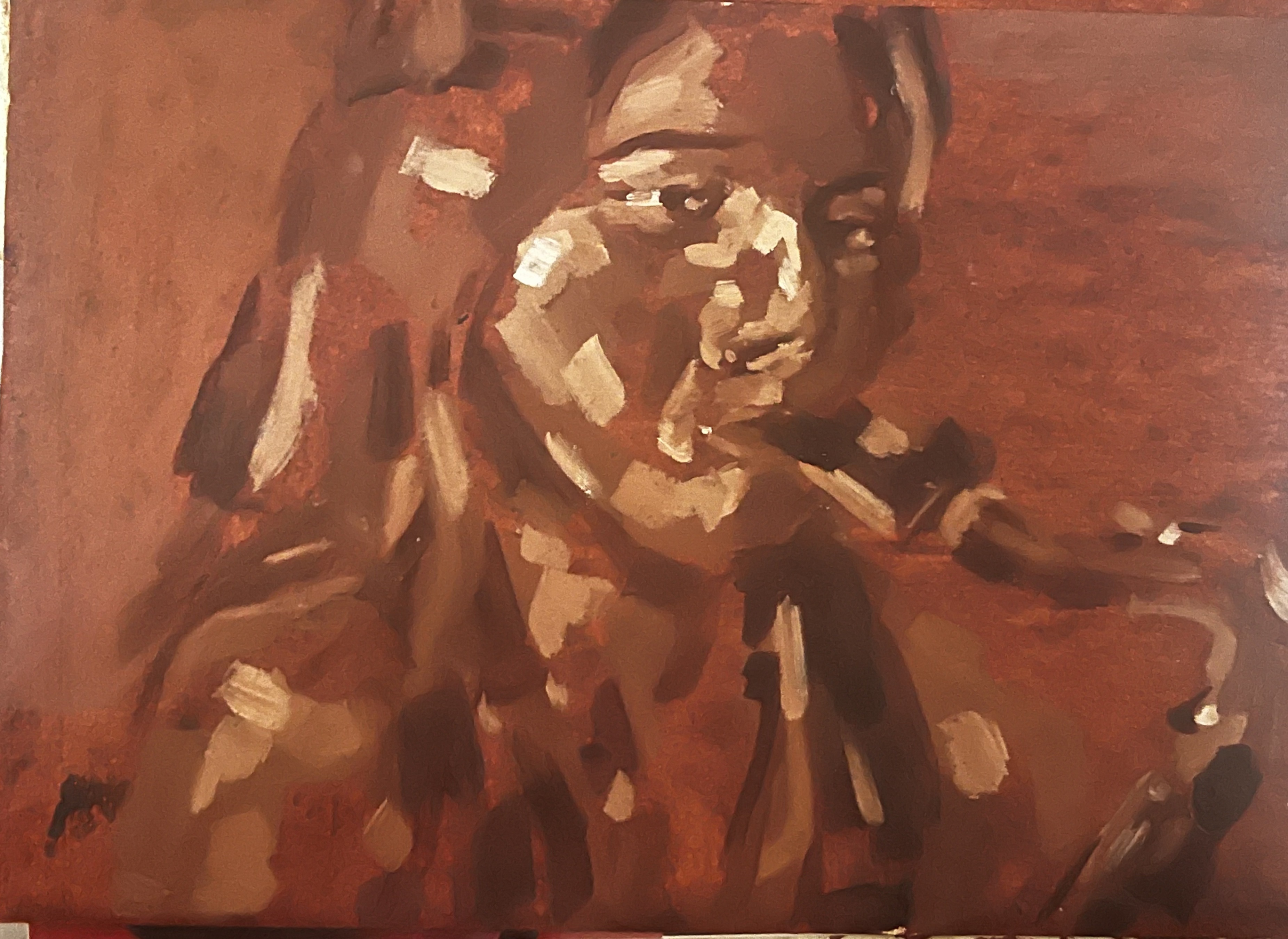

After this process, I used the video as a reference for further art. Taking a screenshot of a still, I wanted to create a piece with dynamic movement which incorporated techniques and materials I had used throughout the years. Mixing colour and black and white, to create an abstract feeling.
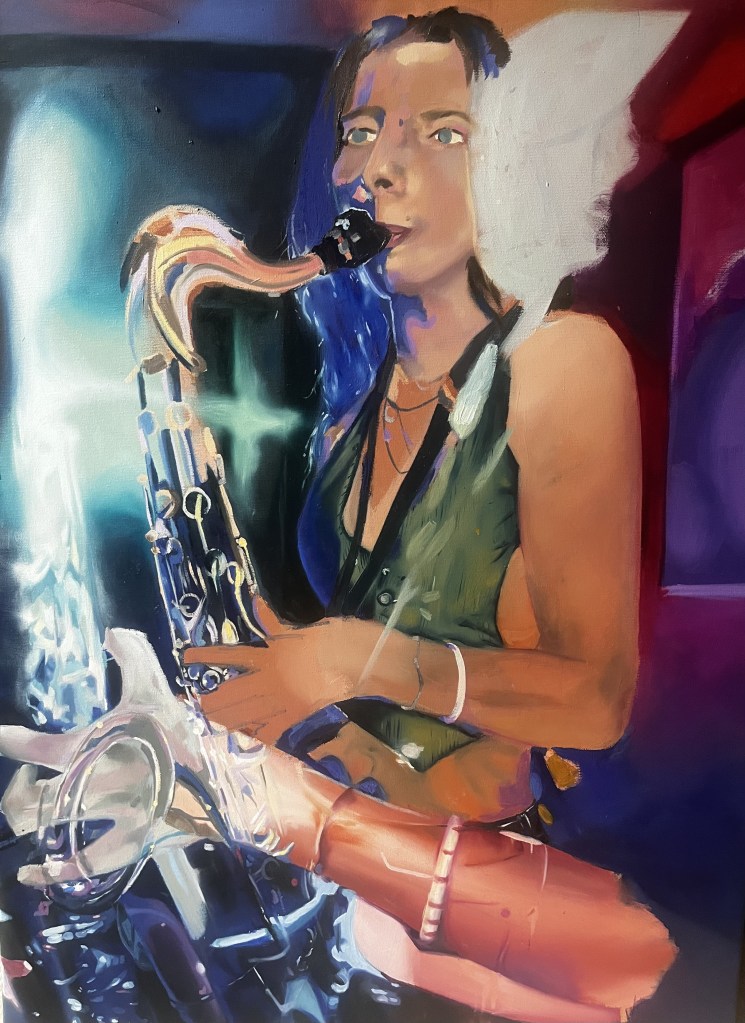
I then took the ideas of motion and large dynamic movement on further. Having used long exposure and translucent layers before, in my initial painting, ‘The Saxophonist’, I used it again but in a tryptic – the paintings for this are currently still works in progress.

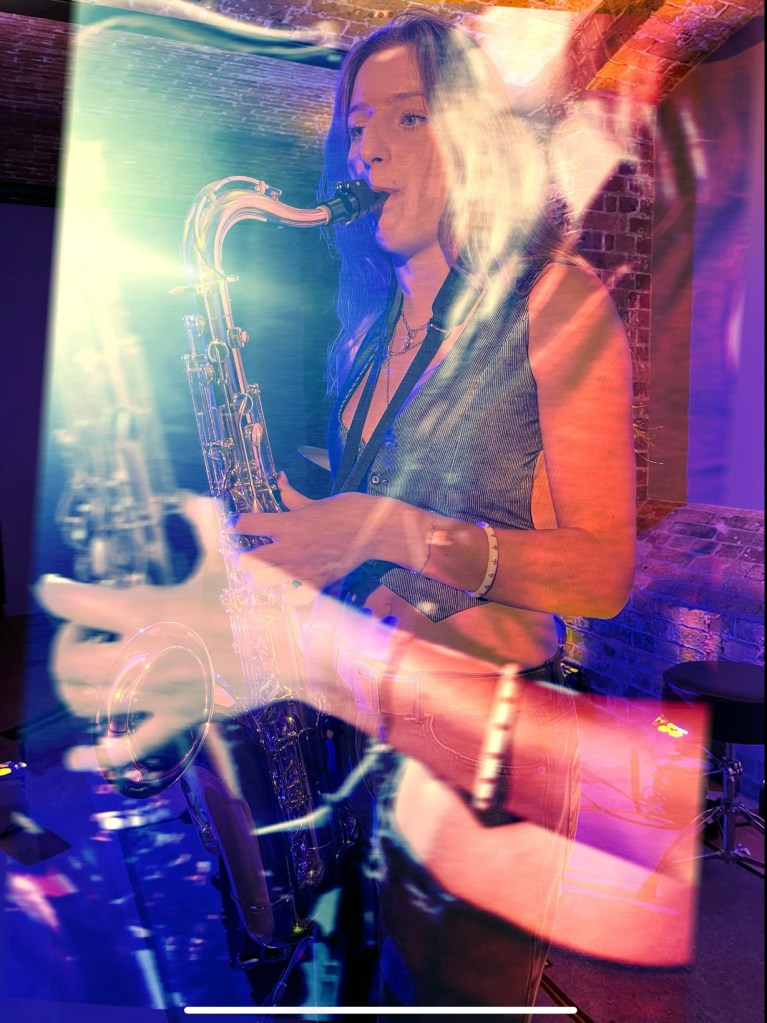
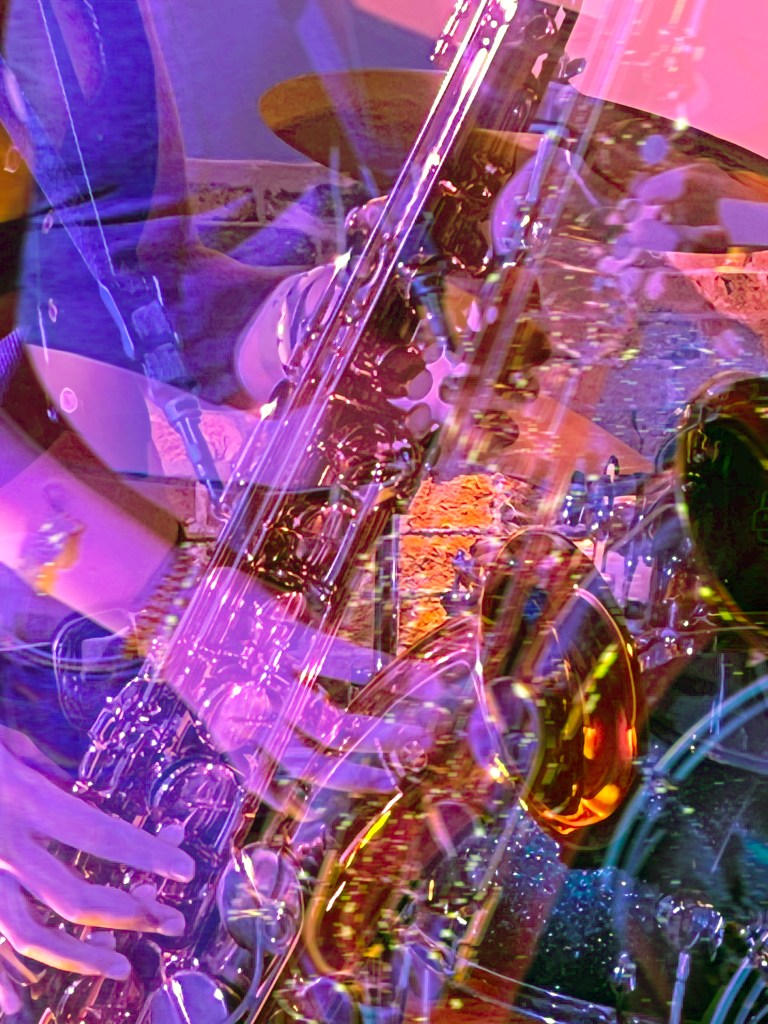
Above are the finalised images used for the tryptic chosen from 10 images put together. And below are the art works in progress.

COLOUR: A large part of the project. Important for theme of ambience and immersiveness of my work. I ensure that I use bold, bright colours, whether they are contrasting with each other or not
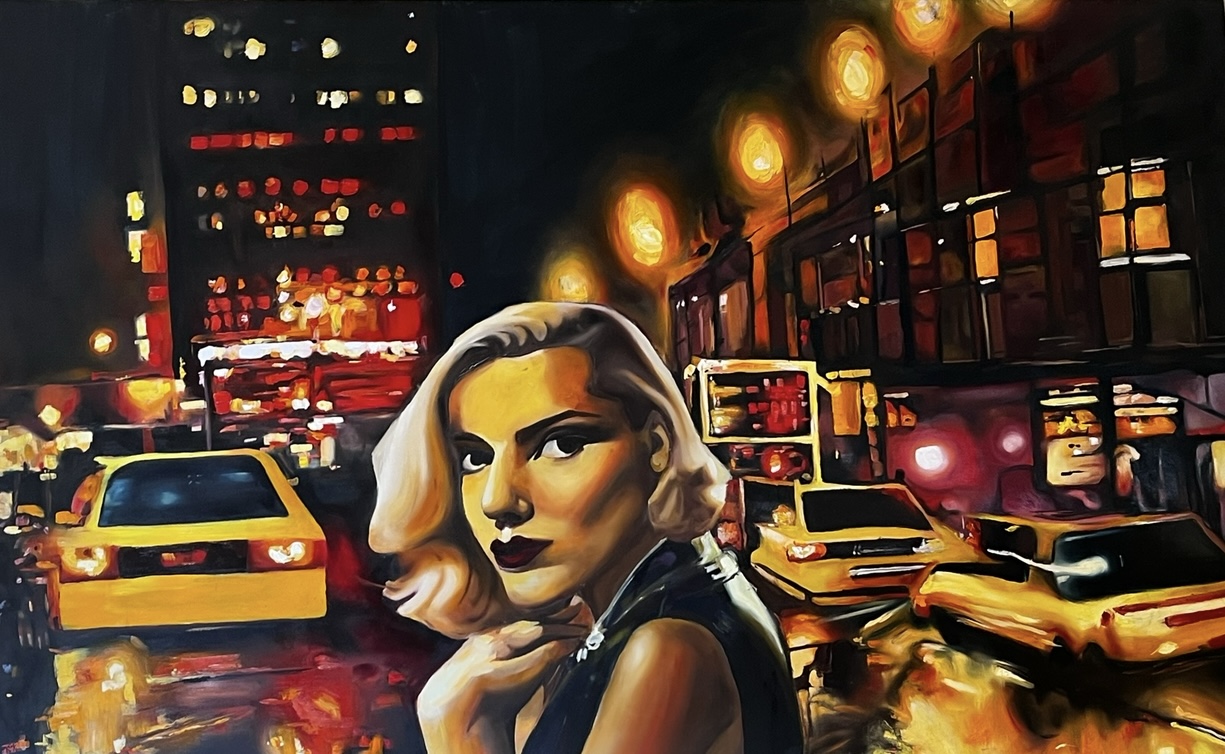
‘City night lights’ (76cmx123cm – middle image), a painting that I painted last year, was what inspired me and drew in me closer to the use of bold colour, using AI and Photoshop to create the image. I then, later, sold the original and had prints made.
This interest then followed me into film, as colour grading is of particular interest to me.

Imprints of the Mind
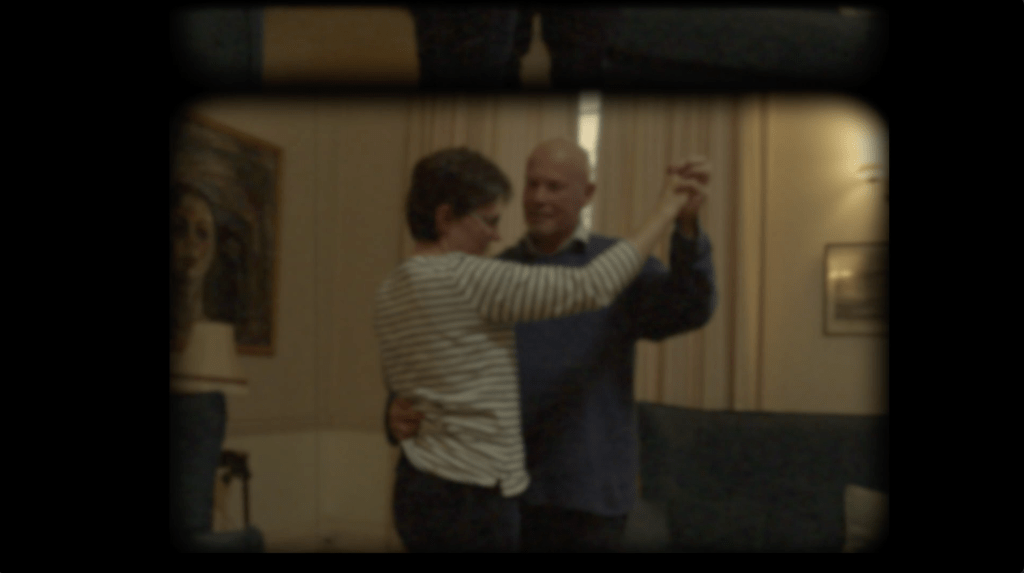
- A film about grief and importance of remembrance of a loved one. Understanding that there is a need for acceptance and recognition. Inspired by COVID and the affects it had on people, especially on the elderly that had to live alone, as well as the impact dementia has on the elderly community. This allowed me to emphasise the significance and importance of memory and the remembrance of the past.
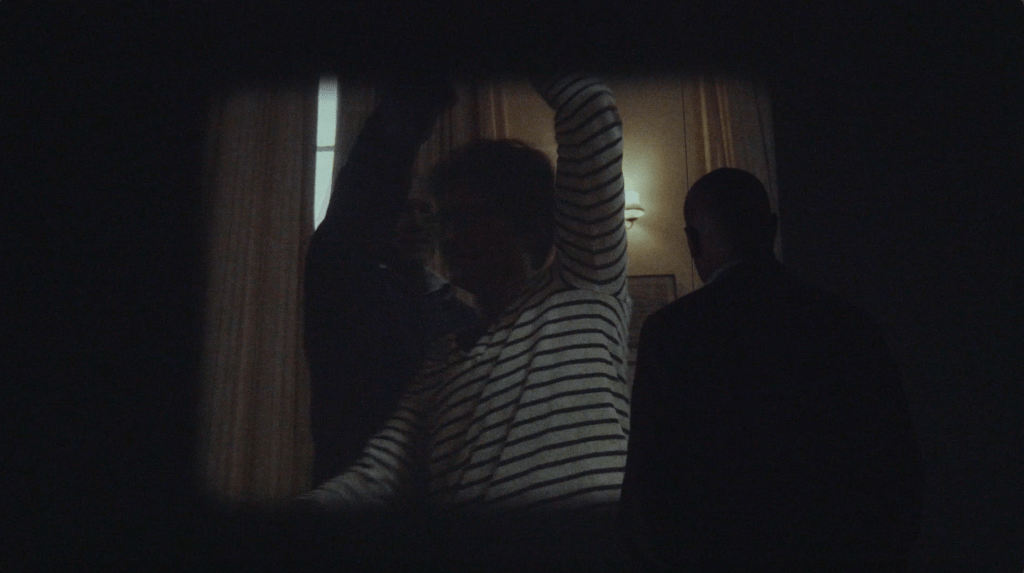
The concept was developed and I focused on the issue of grief and remembrance, depicted through the fragility of memories and threats and dangers of dementia to the elderly mind, with the rare, flickering moments of recognition and remembrance, that are worth embracing and enjoying. Having looked at Cambridge’s article on isolation amongst older adults during covid 19 – more adults are ‘likely to experience social isolation and loneliness during pandemics’, with 28.6% of older adults experiencing loneliness. I wanted to capture the fleeting memories of life and the reminiscing and melancholy that comes with it. With dementia being a rising issue and many affected by this, I wanted to bring a unique perspective forward, particularly, as this was a personal project: I sought to try and get into the mind of the bereaved and to portray reliving life. It has been found, according to Kim S Graham, that often memories can be provoked by certain objects, so by acknowledging this, I used photos and a letter to evoke recollection.
My intention was to create a reflective film dealing with themes of nostalgia, closure, and grief. Having taken inspiration from the animated film, Inside Out (2015) – directed by Pete Docter, I wanted to represent images as though he is inside his mind, reflecting on his own memories, as is shown in the animated film. Memories are shown to be projected inside his mind – used as a form of comfort, emotional understanding, and healthy recognition of one’s story, I believe this to be an effective and realistic way of representing memories.
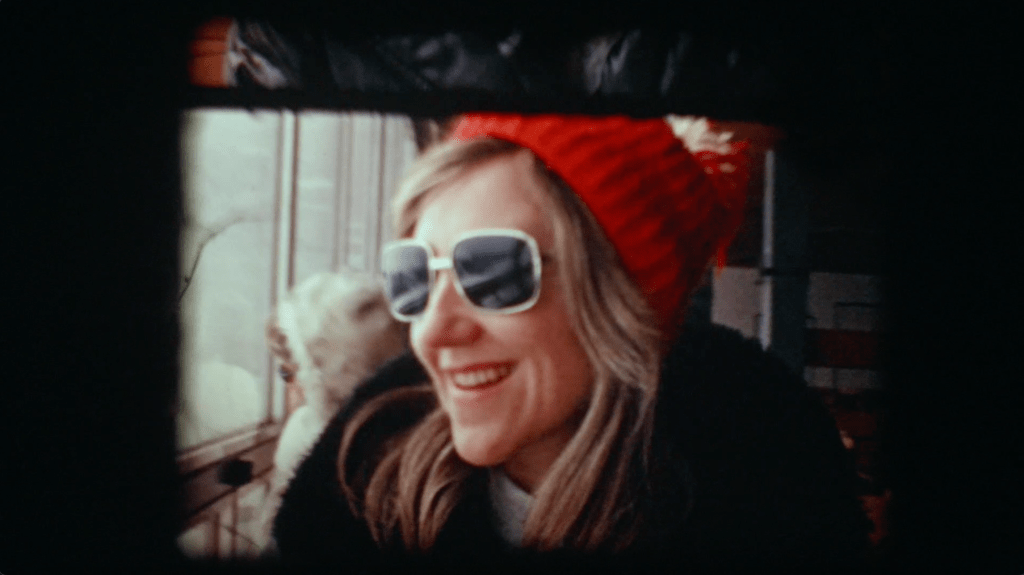
I also took direct cinematic inspiration from Atonement (2007) – Joe Wright, that used projection to create great emotional value to scenes. His use of projection in the film Atonement, whilst not of memories, but instead, of Port of shadows (1938) (Marcel Carné, a popular film at the peak of war time) is a clever way of reflecting his deep desire of his loved one – Cecilia, using the projections of Port of Shadows as a symbolic representation of his discontent and tragic separation of his partner. It allows us, the audience to visualise his emotions and passions, in a subtle yet poetic way. I wanted to mimic this, not only for its cinematic value, but also its emotional one, as it allows the audience to delve deeper into his mind. Additionally, Joe Wright’s use of historical film footage in a contemporary film (use of multimedia) led me to become interested and intrigued by the use of home cinema and 8mm film footage, as a way of getting authentic 1960s-70s reflective material for the protagonist to reminisce. With Münsterberg noting that it fuses ‘our fields of vision, just as they are brought together in our own consciousness’.
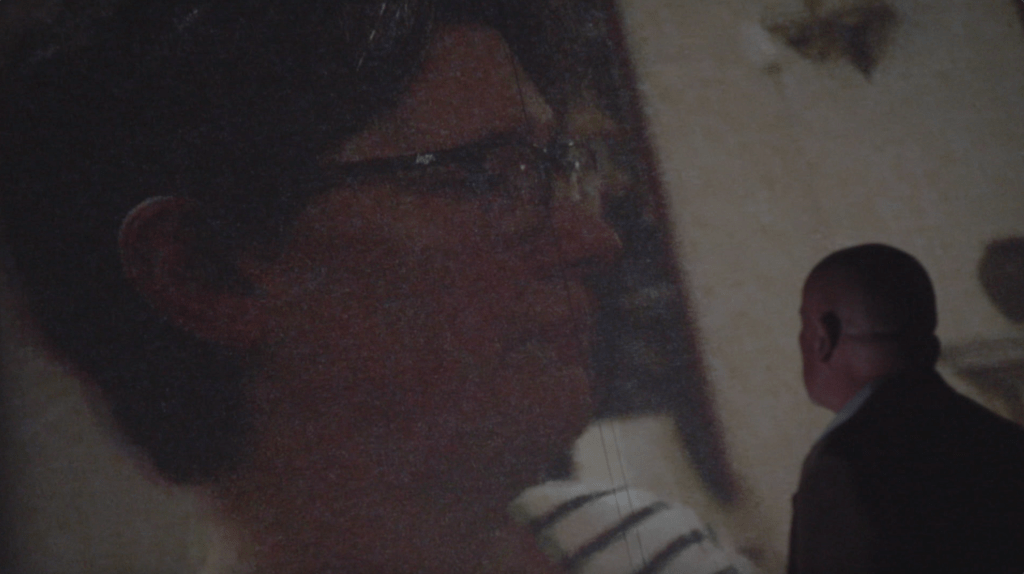
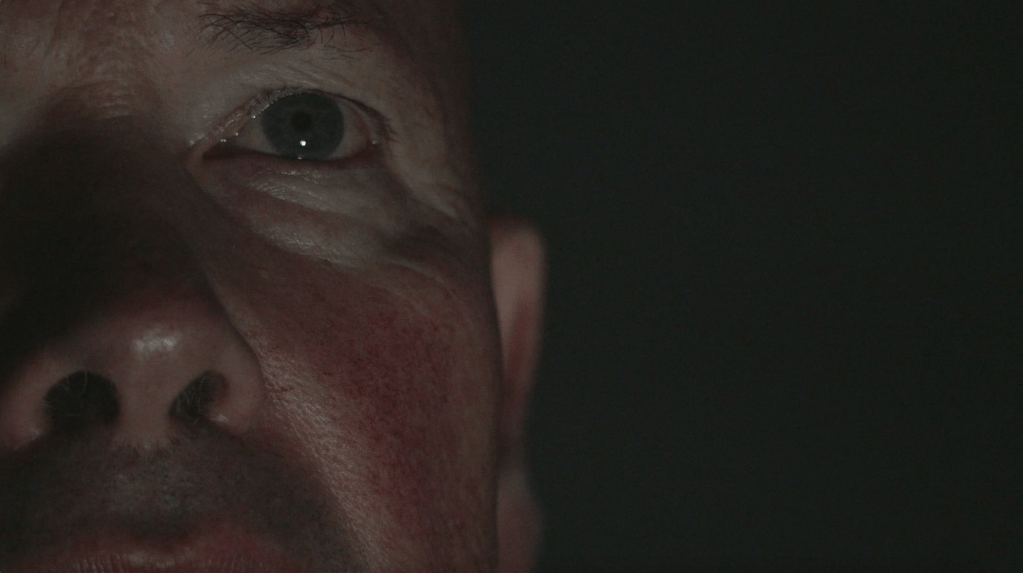
Since, I wanted lots of close-up shots, I took inspiration from the Polish film Three colours: Blue (1993) -Krzysztof Kieślowski, which for me conveyed the gateway to the soul – portraying the inner mind. Adding mist and dust to the projector, not only added a cinematic quality to the shots, but also symbolised the old with the new – emphasising the aged nature of the memories through the metaphor of dust. The new and old was also emphasised by the use of two projectors, one from the 1960s and one recently bought in 2024.
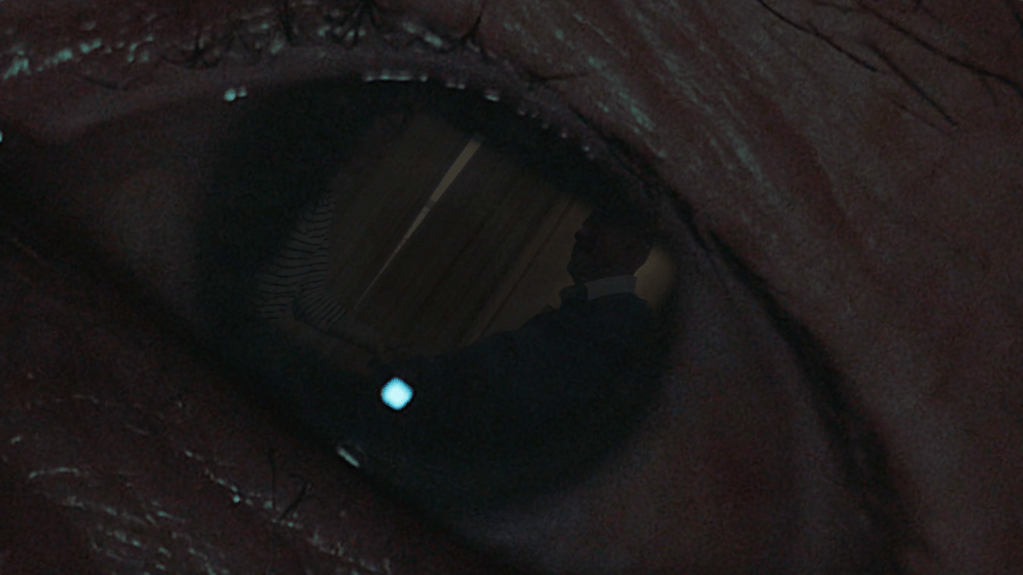
Knowing that music evokes ‘cognitive memory related processes that induce personal, often emotional experience’, I therefore, as director, wanted sound to be one of the main points of the movie, as it can easily change the tone, making it more emotive. Whilst I did have some challenges at first – with my producer unable to finish the piece we had written, I later opted for the composition by Ludovico Einaudi – Nuvole Bianche, having listened to his work before and taken inspiration from This is England‘s opening scene. Whilst this changed the psychological feeling of the film, it’s genre and key still managed to fit the film sequence well enough to get an emotional response.
Whilst the score was important, the blend of both diegetic sounds of the projector and music was vital to creating a continual and symbolic movement. The flickering sound of the projector reflects the idea of flickering memories and the cognitive response the protagonist is having to the letter and photos.
Two Sided
- My film centred on a man struggling with schizophrenia, haunted by a mythological figure, resulting in a tragic end. This narrative gave me the ability to delve deep into his mind to study the themes of isolation, inward reflection and effects of neuropsychological medication.
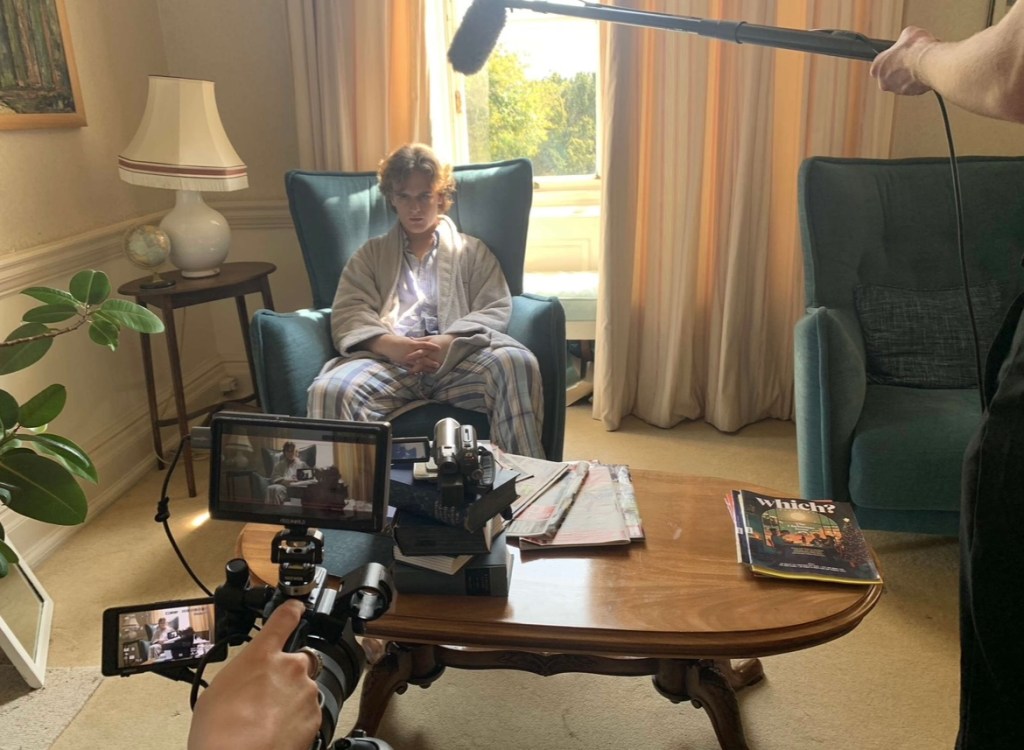
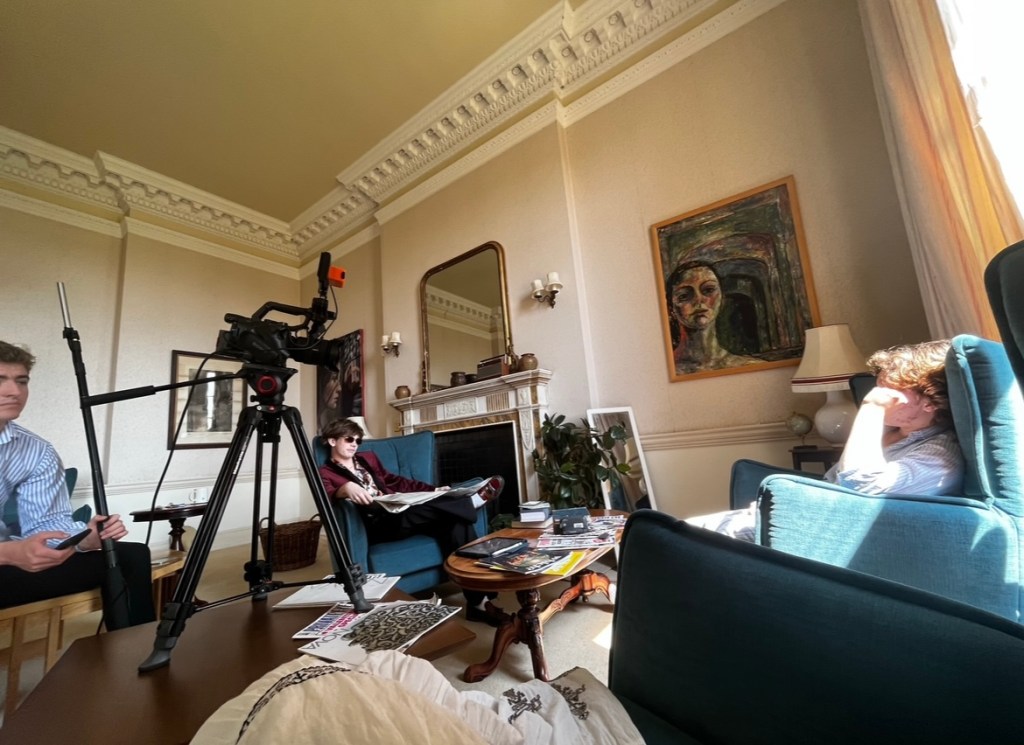
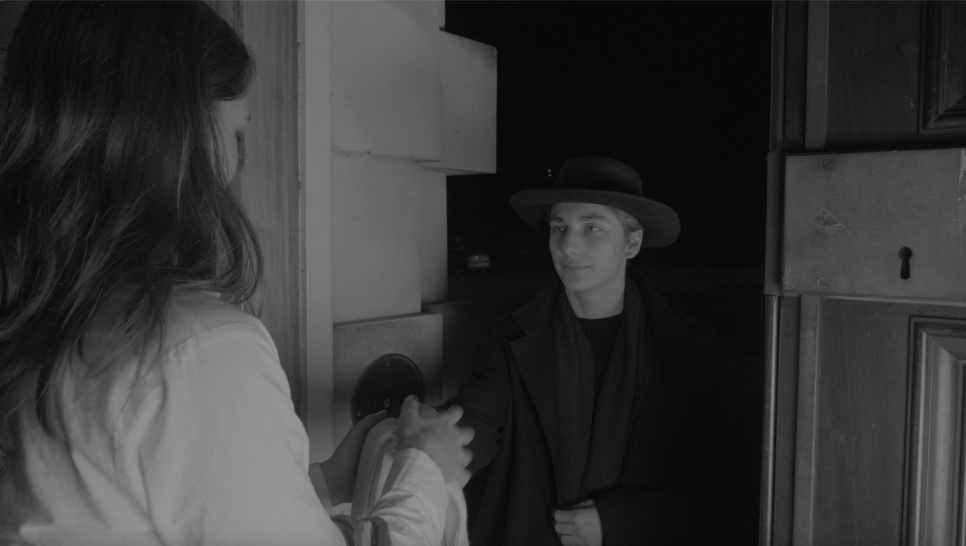
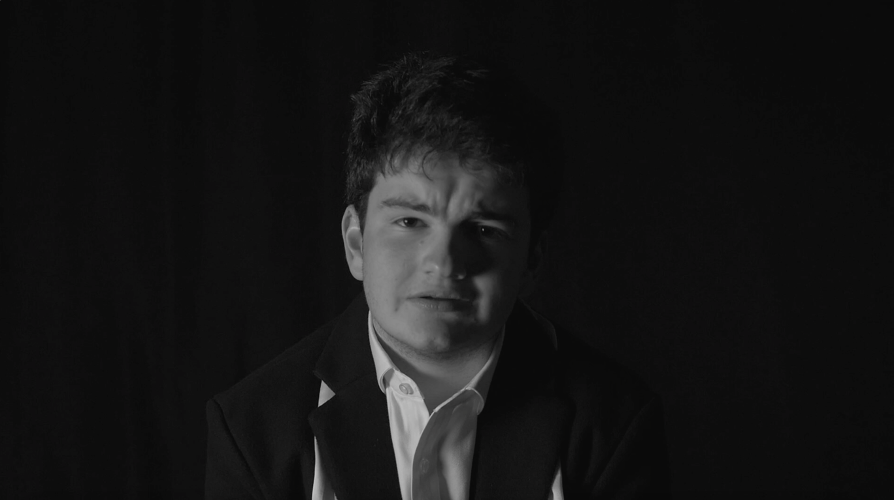
Inspired by human angst and supernatural horror, my vision was to create a psychological thriller, highlighting drug-use, schizophrenia, and isolationism. I particularly wanted to create a thought-provoking storyline emphasising misdirection and questioning, leading to an uncomfortable tense interaction and uncertainty between the two characters. I wanted to influence the audience to feel the increased need for control and quickly experience the immediate loss of independence and sanity, to leave an impact on the audience, emphasising the understanding of self and alternative ways of pushing boundaries.
I further wanted to instil a feeling of being trapped, unable to escape physically or mentally, from one’s mind. To highlight isolationism and inner discord – the disconnect between the reality of the self, with flaws and mistakes and denial of the actuality of this identity. I was inspired by human angst and supernatural horror and researched several movies in this genre.
I took inspiration from David Fincher. His orientation towards psychological comedy thrillers influenced the character connection, film aesthetic and style vision. David Fincher’s Fight club (1999) closely fits into the sub-genres and deception of reality I wanted. Fincher uses split-second flashes of Tyler Durden, hinting at his schizophrenic state of mind. This technique influenced me, as it used Fincher’s clever way of adding his ‘subtle nuances’, that can go unnoticed. This discrete use of introducing the character in a paranormal way was a technique that I wanted to bring forward, as it would make the audience question his identity and leave an eeriness in the atmosphere.
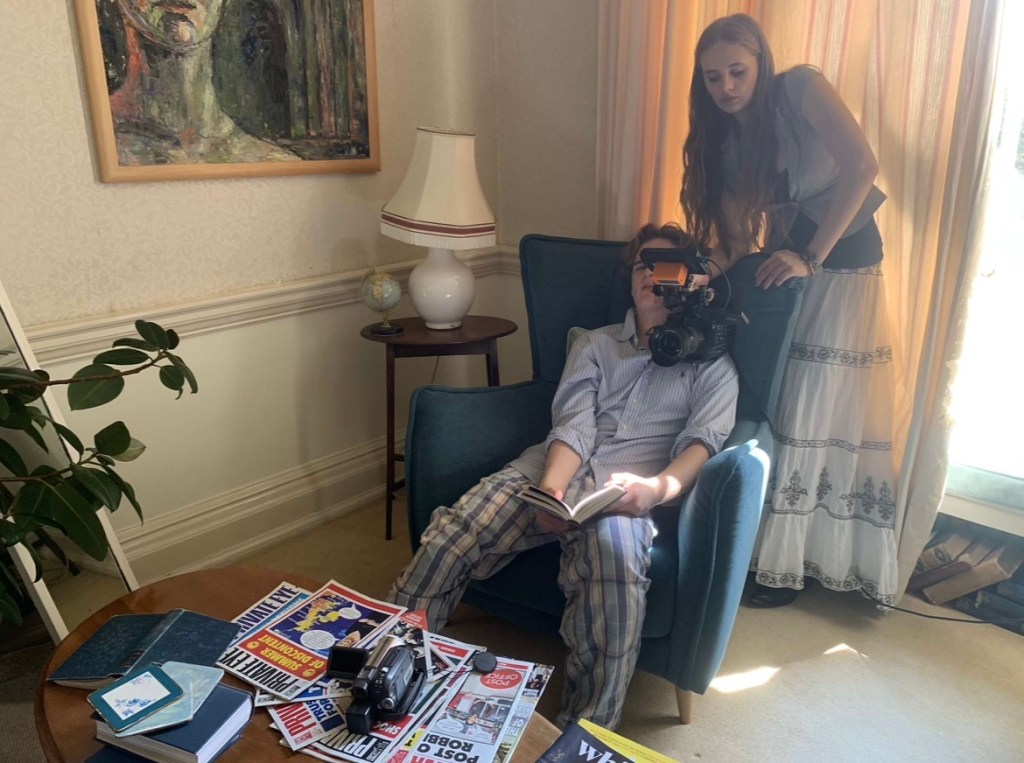
Two other films that inspired the vision of ‘Two Sided’, was the Blair Witch Project (1999) and Breakfast Club (1985). Daniel Myrick and Eduardo Sánchez – Blair Witch, used camcorder footage to create a more intimate, amateur style, ‘spliced together scenes of shaky home video footage, … seem even more authentic and terrifying.’ I wanted to explore this as it connects the audience to the character more, intensifying their character’s horrifying experience. By using a handheld camera, it allows for another opportunity to get their point of view across besides an amateur approach.

Script Writing – Film Noir
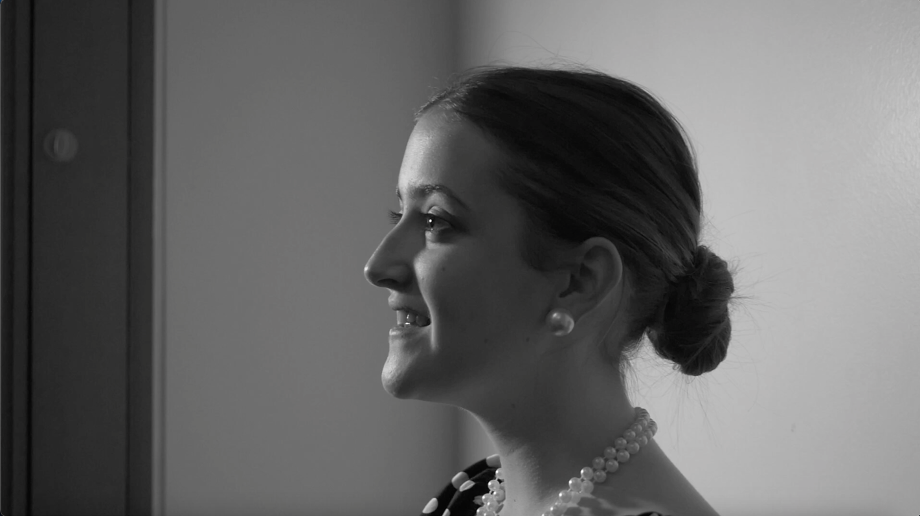
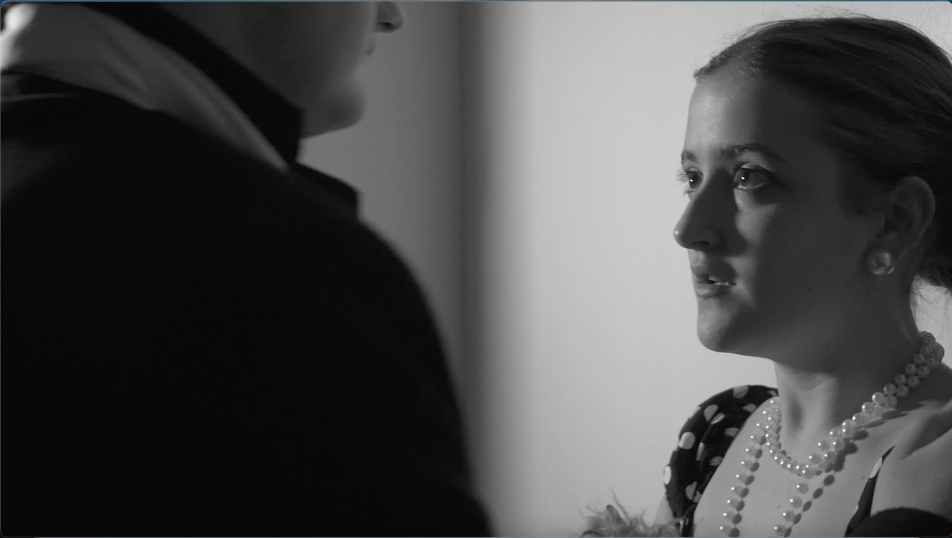
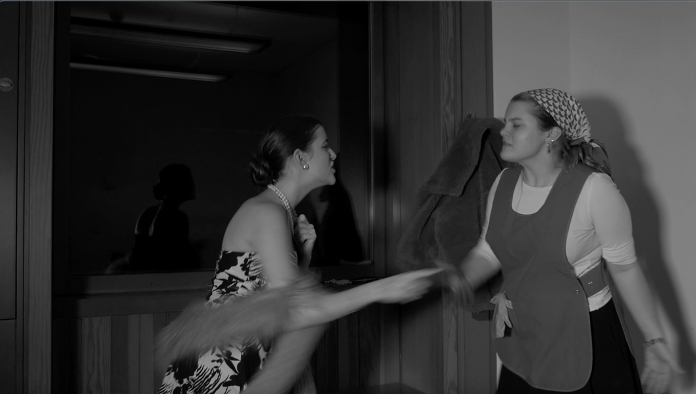
This is a film set in an opera house, where their star Prima Donna has been found murdered in her dressing room by one of her colleagues. The Detective Inspector comes in and questions all the suspects, uncovering the events leading up to her death and discovering the true colours of each character – who manipulates and who is manipulated? So, who will it be? The Director, Odette Delliere the understudy, Jack Smith the co-star and lover or the maid. However, they are all guilty of something.
Exerpt – page 3 of 8
- Set on the night of the murder, kept in the opera house by Chief Detective Inspector. Nerves increased. Each person taken in separately to be investigated. With the stage lights shining down harshly on the faces, the detective’s face is yet to be seen, covered by the shadows. Odette and Jack have already faced their first interrogation, next up is the Director. He sits well postured and confidently – aired with arrogance. However, once spoken to, has a defensive and aggressive tone, seemingly guilty and unsure.
Director:
(angrily)
Why am I here. You think I killed her? Always had to be in the spotlight that one.
D.I:
Why don’t I ask the questions Director, and you sit there and answer them. I understand you found the body. Am I correct?
Director:
That’s right.
D.I:
How did you happen to come across it?
Director:
I wanted to go over a couple of our artistic differences before I headed out for the night.
D.I:
And why couldn’t this wait till the morning?
Director:
It was imperative she understood what she did wrong, so that she could go home and get it right.
D.I:
And you walked in, and she was dead?
Director:
Naturally.
D.I:
And you then went straight to the police?
Director:
Of course, I did!
What sort of question even is that? I found the nearest telephone box and asked for them.
D.I:
If you don’t mind me saying, Director, you don’t seem particularly upset by the death of your leading lady.
Director:
I always knew something like this would happen.
Always running her mouth, wouldn’t shut up. All her little remarks. If you ask me, she killed herself for the fame.
D.I:
Do you really?
That’s quite the assumption
VOICEOVER
D.I:
Quite the character, that director.
Oddly defensive for an ‘innocent’ man. I have heard rumours of the leadership style in this theatre, seems it can be rather rigorous. And it wouldn’t surprise me if he could be driven to violence.
NEXT INTERVIEW
D.I:
And you, madam?
Could you state your role at the theatre?
Maid:
I only do the cleaning.
Tidy the cast’s dressing rooms and what not, mop the floor after each rehearsal, and every now again I need to-
D.I:
Yes, yes I think I understand.
So, where were you on the night of the 17th?
Maid:
Well, let me think.
Oh yes! I was taking out the rubbish. Theatres like those tend to generate a lot of that ahahhhahaha *annoying laugh*. I tell you, I had quite the morning that day. I spilt half a bottle of bleach on the carpet the hallway. I can be such a clutz sometimes.
D.I:
Fascinating. A single sentence would have sufficed.


Artistic Explorations
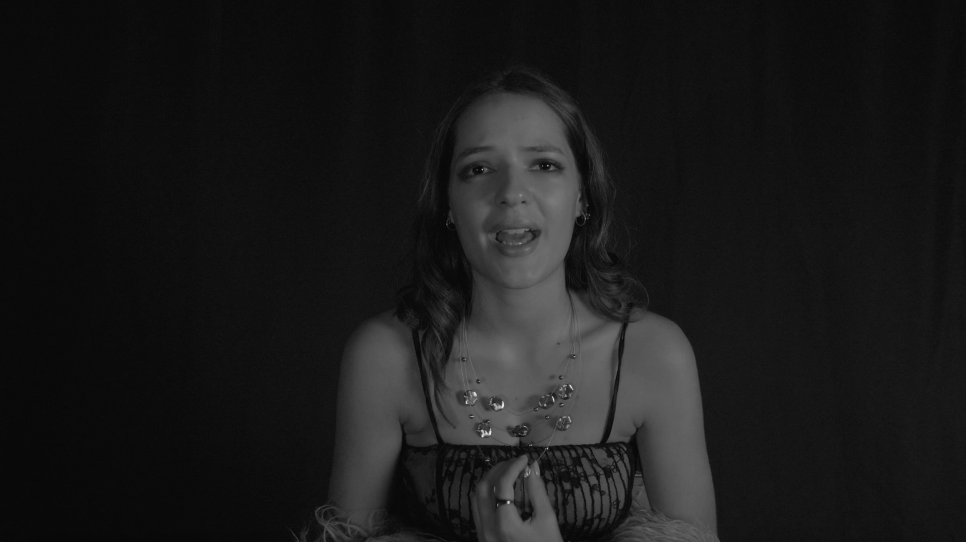
- Film stills + art + photography.
- This selection from my portfolio offers a deeper glimpse into the diverse ways I interpret and interact with the world through my art.
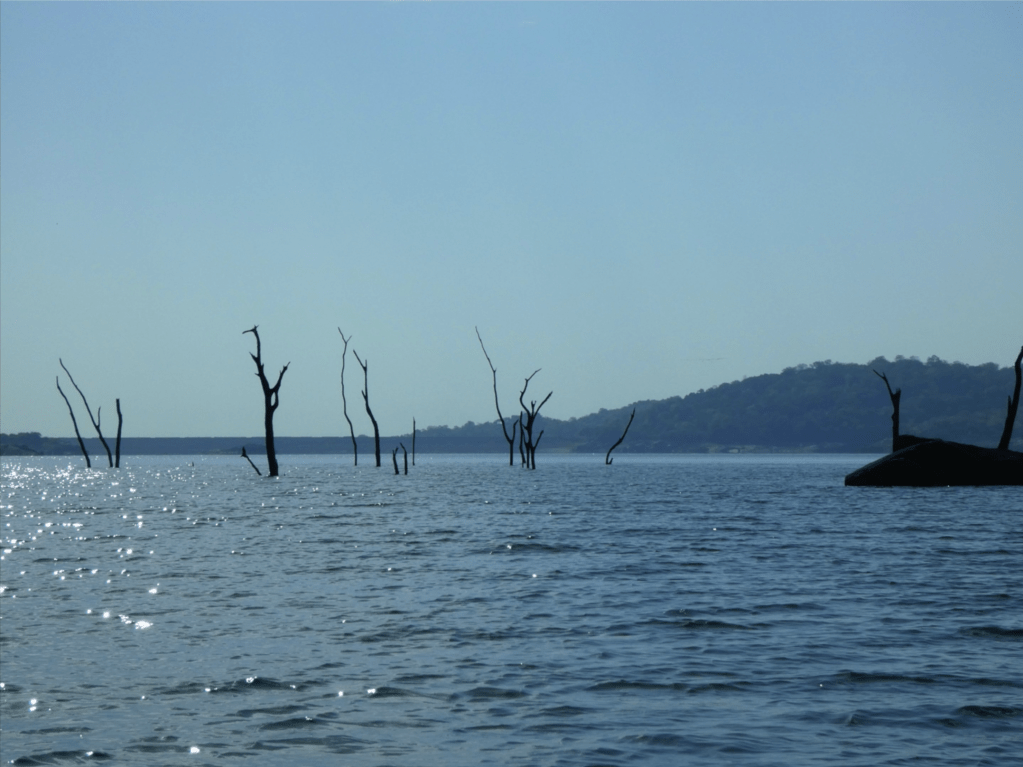
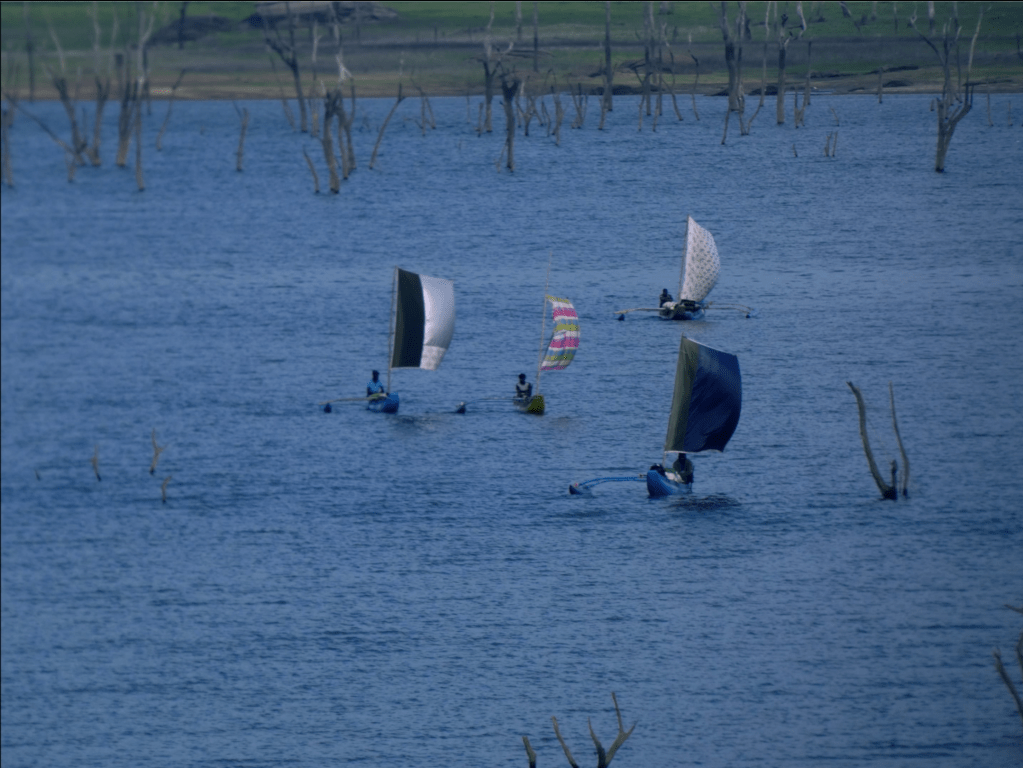
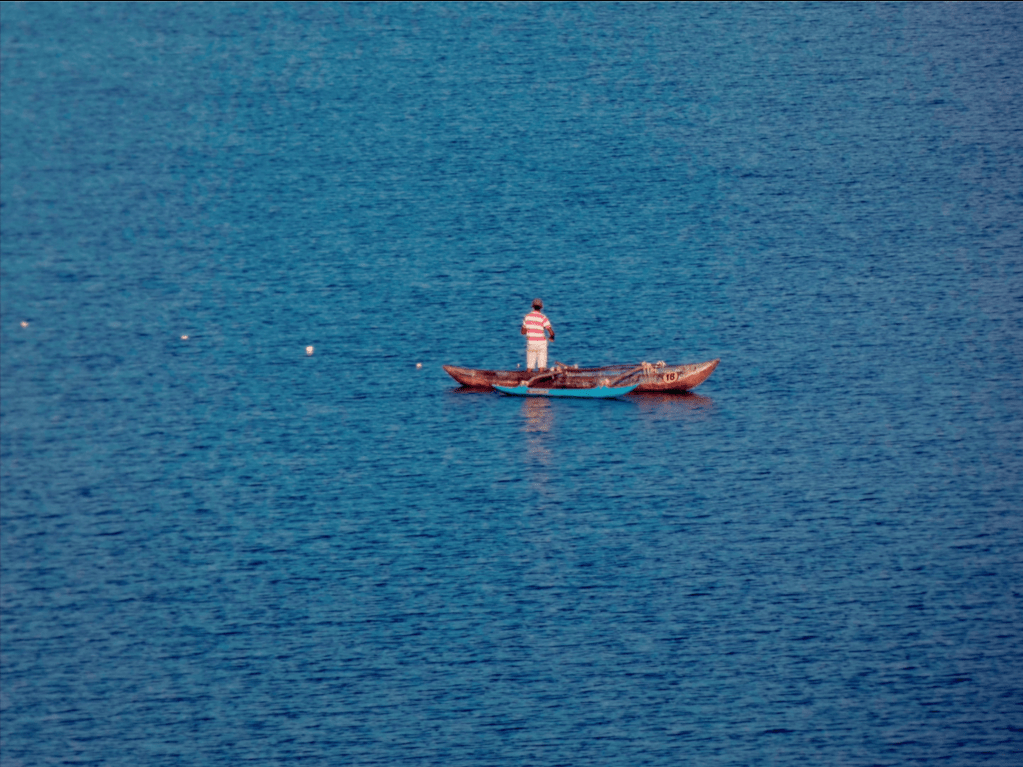
Photography of wildlife and culture.







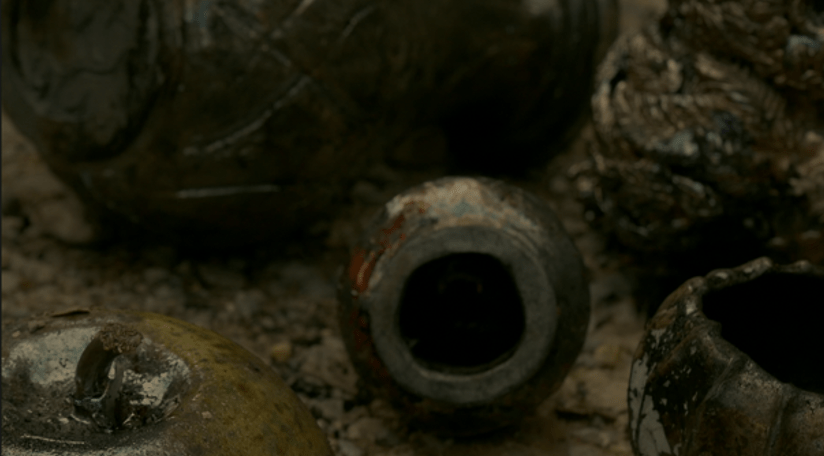
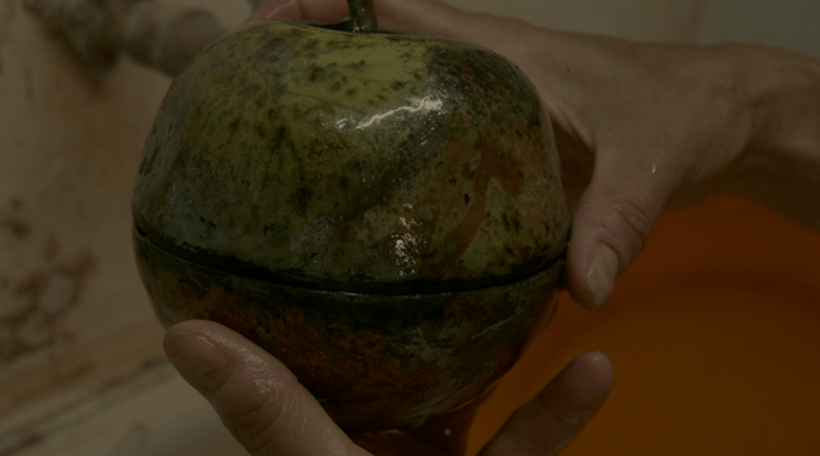
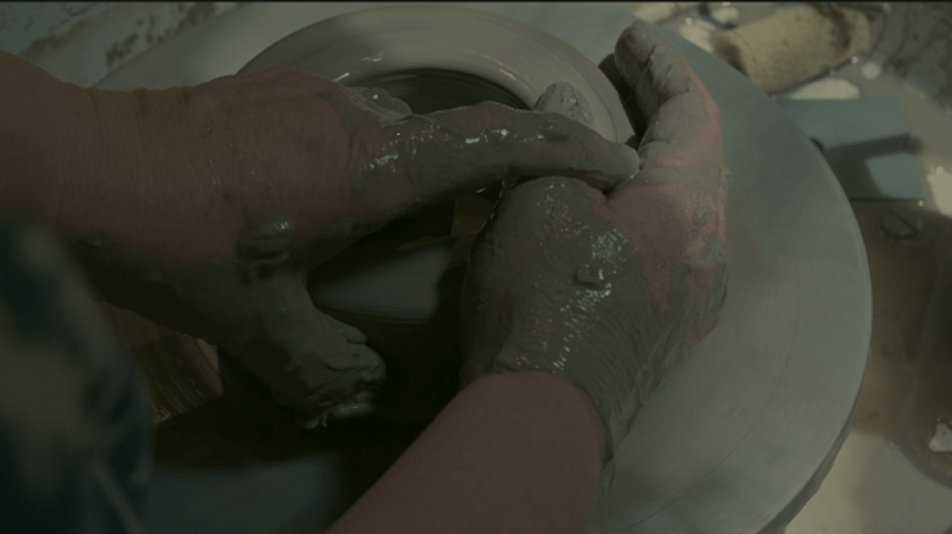

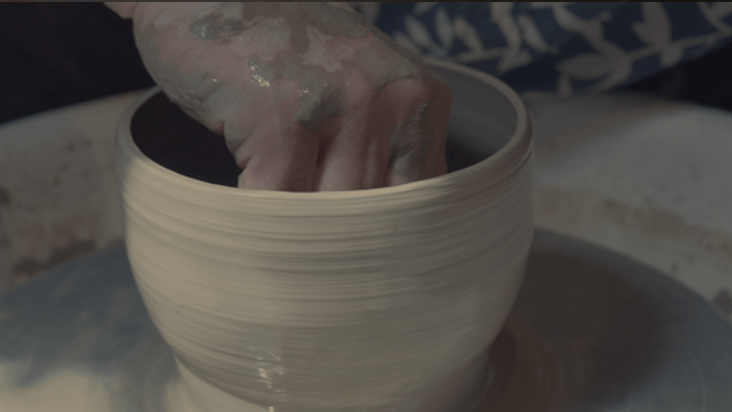
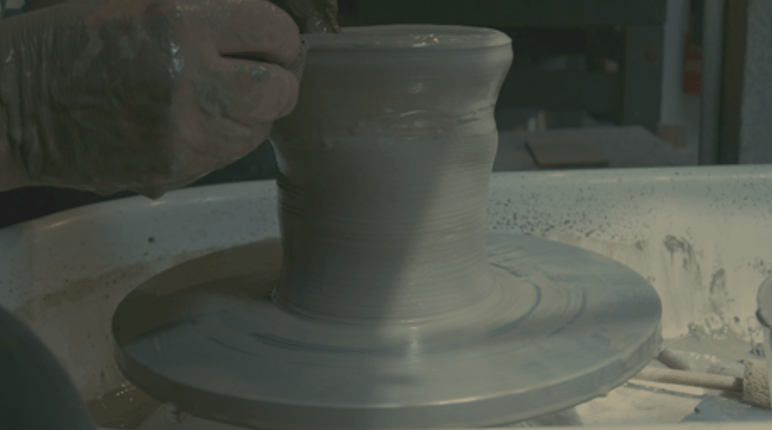
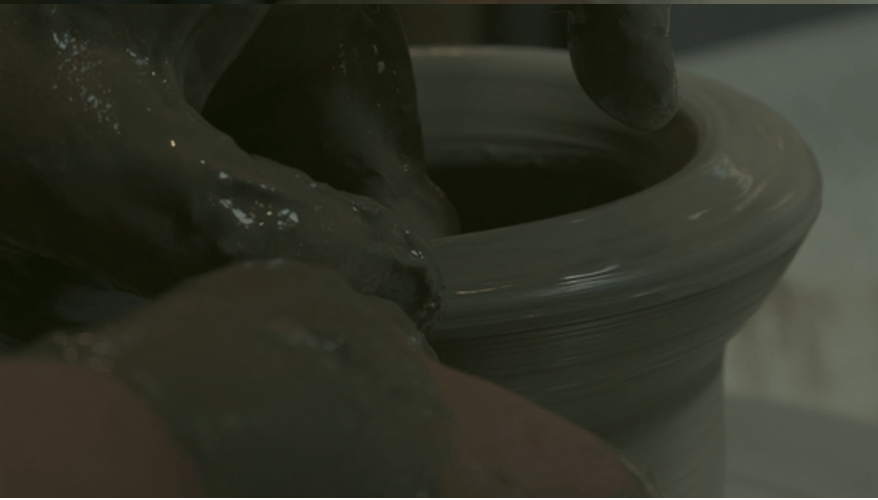
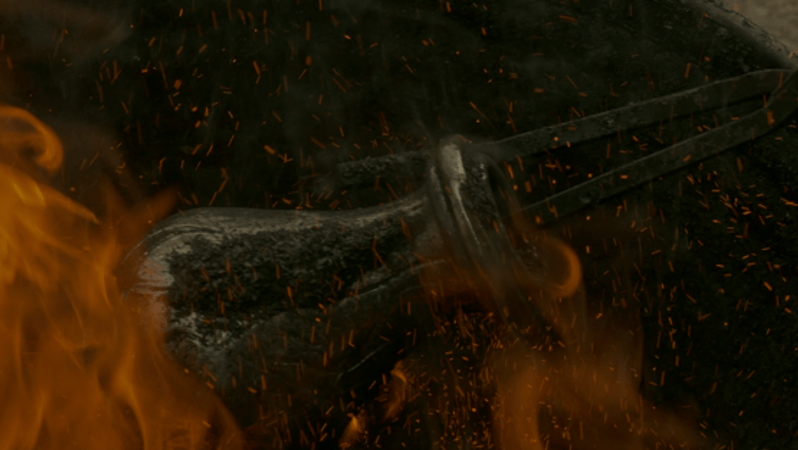
- Film stills from a documentary I made about the Raku firing process at West Street Potters at The Farnham Pottery, Wrecclesham.
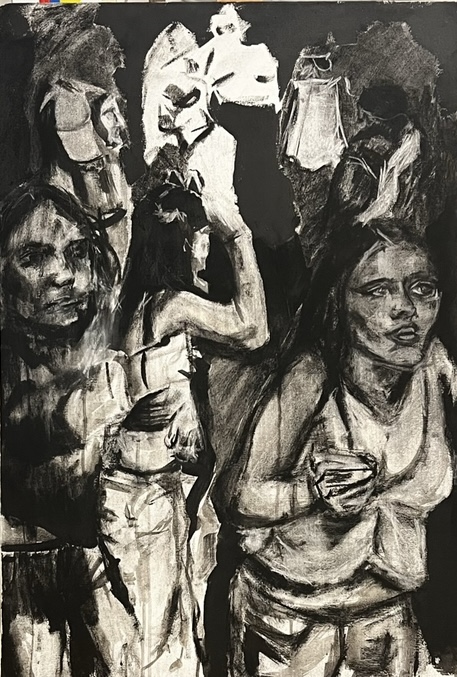
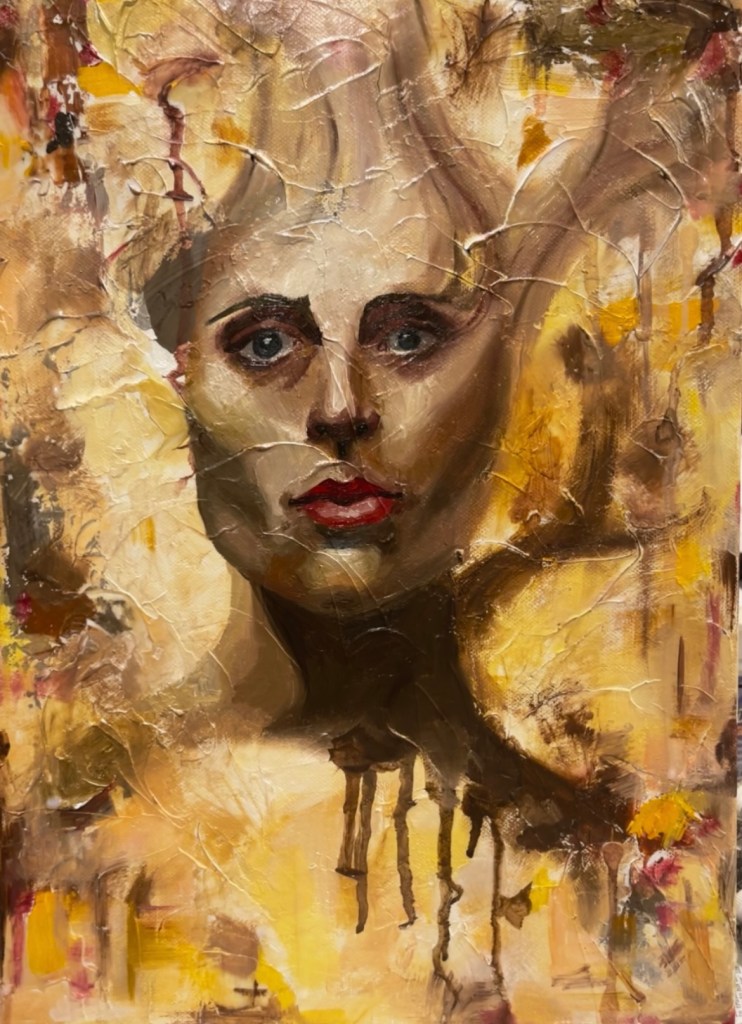
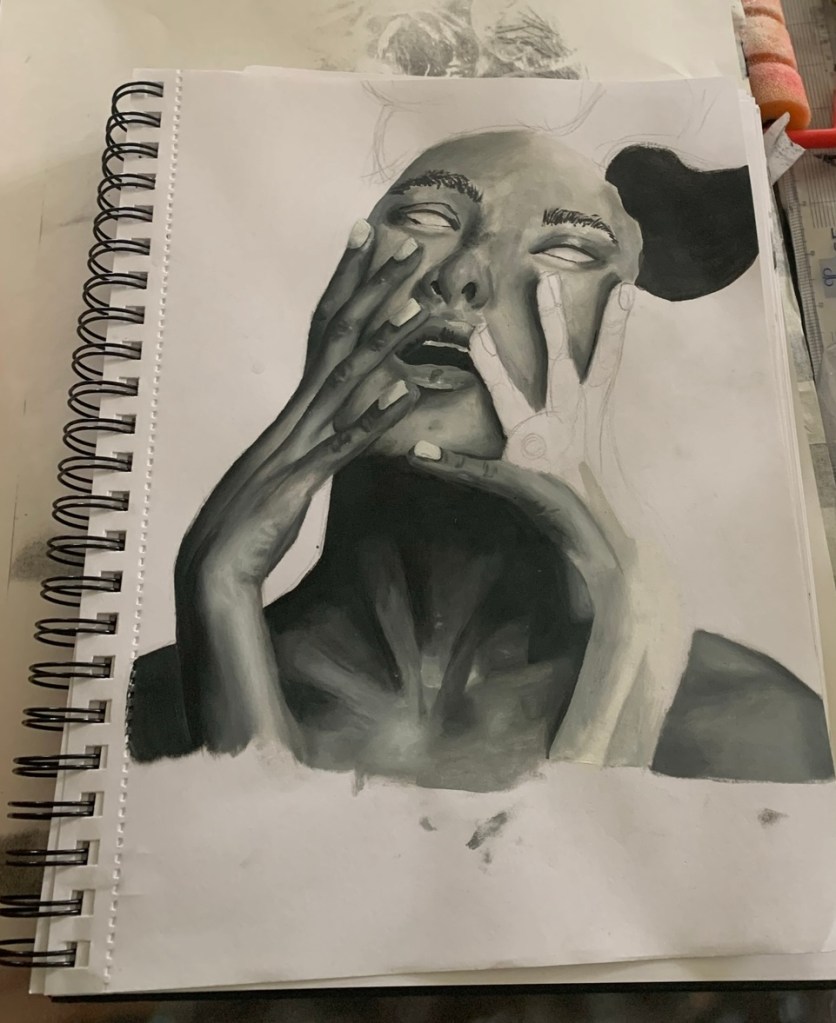
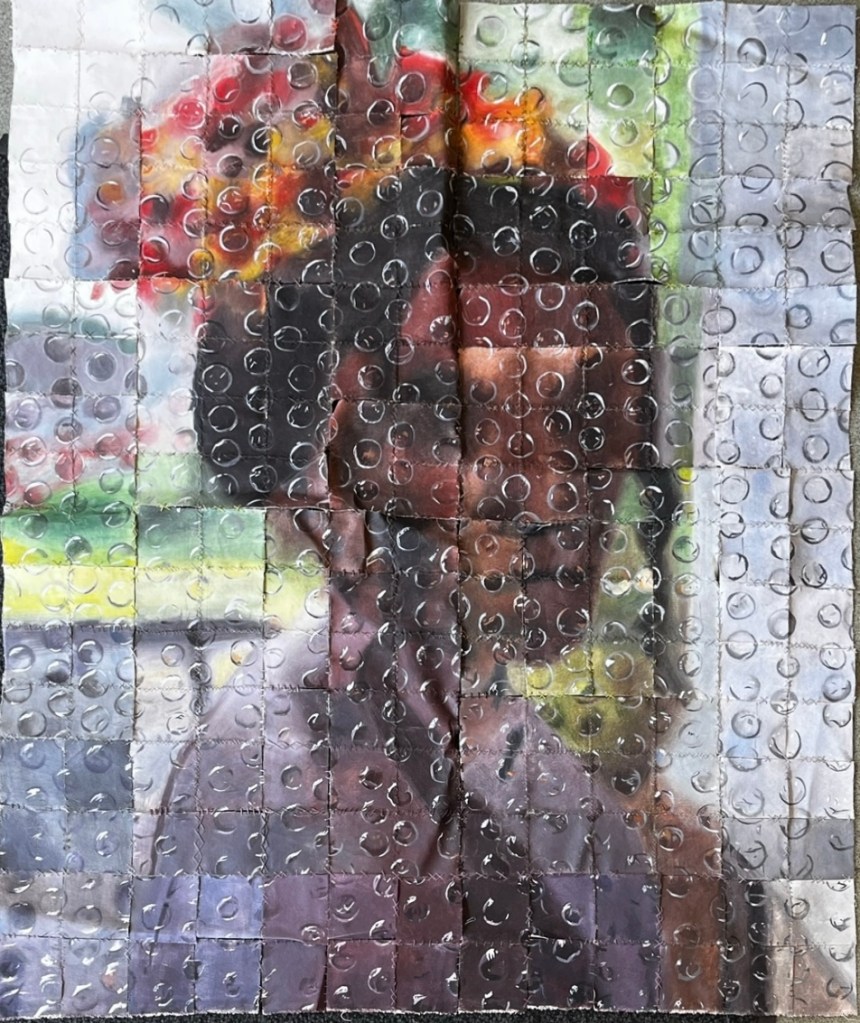
Some additional art works:
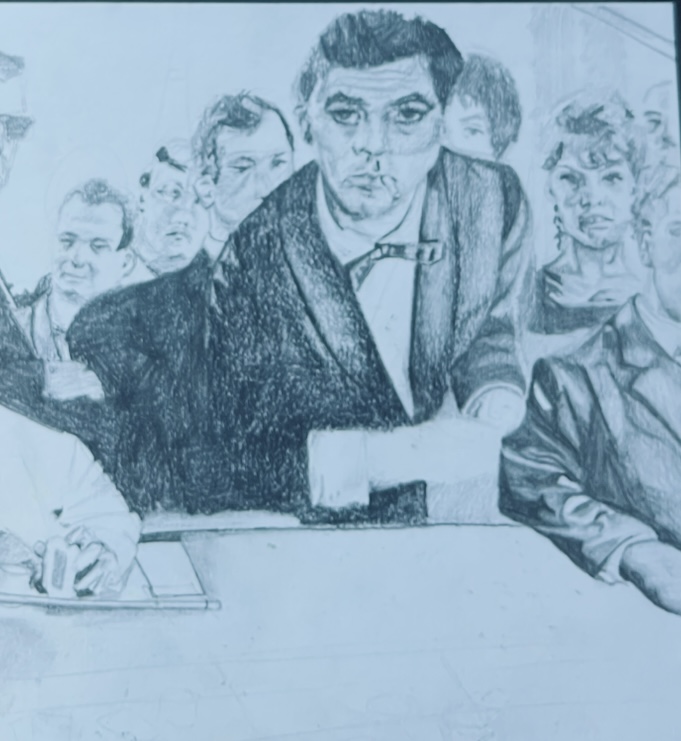
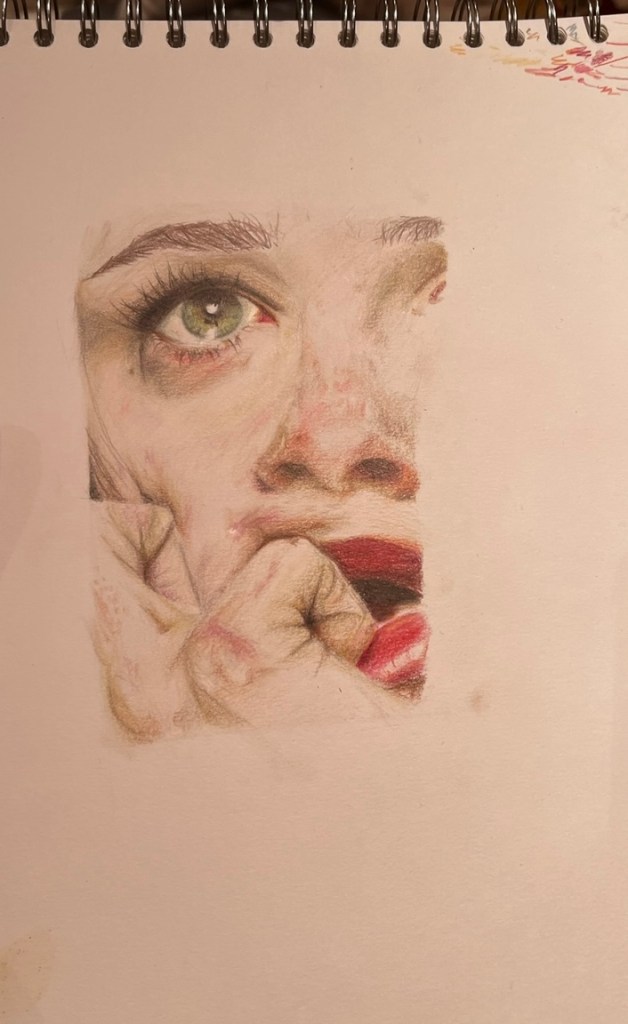



 EYL PORTFOLIO